
Did you know that cleaning issues account for 27% of all tenancy deposit disputes in the UK? It's a staggering figure that highlights why having a professional end of tenancy cleaning checklist is essential for any tenant preparing to move. Whether you're worried about stubborn oven grease or the state of the carpets, the fear of losing hundreds of pounds over minor oversights is a common stress. You've worked hard to maintain your home, and it's only right that you get your security deposit back in full without a fight.
This guide provides a comprehensive roadmap to help you meet professional standards and satisfy even the strictest inventory clerk. We'll walk you through a detailed, room-by-room plan that covers everything from high-level dusting to the specific requirements of the Tenant Fees Act 2019. You'll learn how to restore the property to its original state while accounting for fair wear and tear, whether you're preparing for a standard move or a rigorous military march-out inspection. This approach gives you the confidence to hand over your keys and move on to your next chapter with total peace of mind.
Key Takeaways
- Learn how to align your cleaning efforts with the original inventory report to meet the precise standards required for a full deposit return.
- Follow our comprehensive end of tenancy cleaning checklist to ensure every area of the kitchen and bathroom is addressed to a professional standard.
- Identify why specialist carbon removal for ovens and deep carpet cleaning are essential to avoid the most common causes of inspection failure.
- Gain insights into the rigorous requirements of military march-out inspections and the maintenance of exterior areas like gardens and patios.
- Master the final walkthrough to view your property through a landlord's eyes and fix minor issues before they become costly deductions.
Understanding the Landlord Standard for Deposit Returns
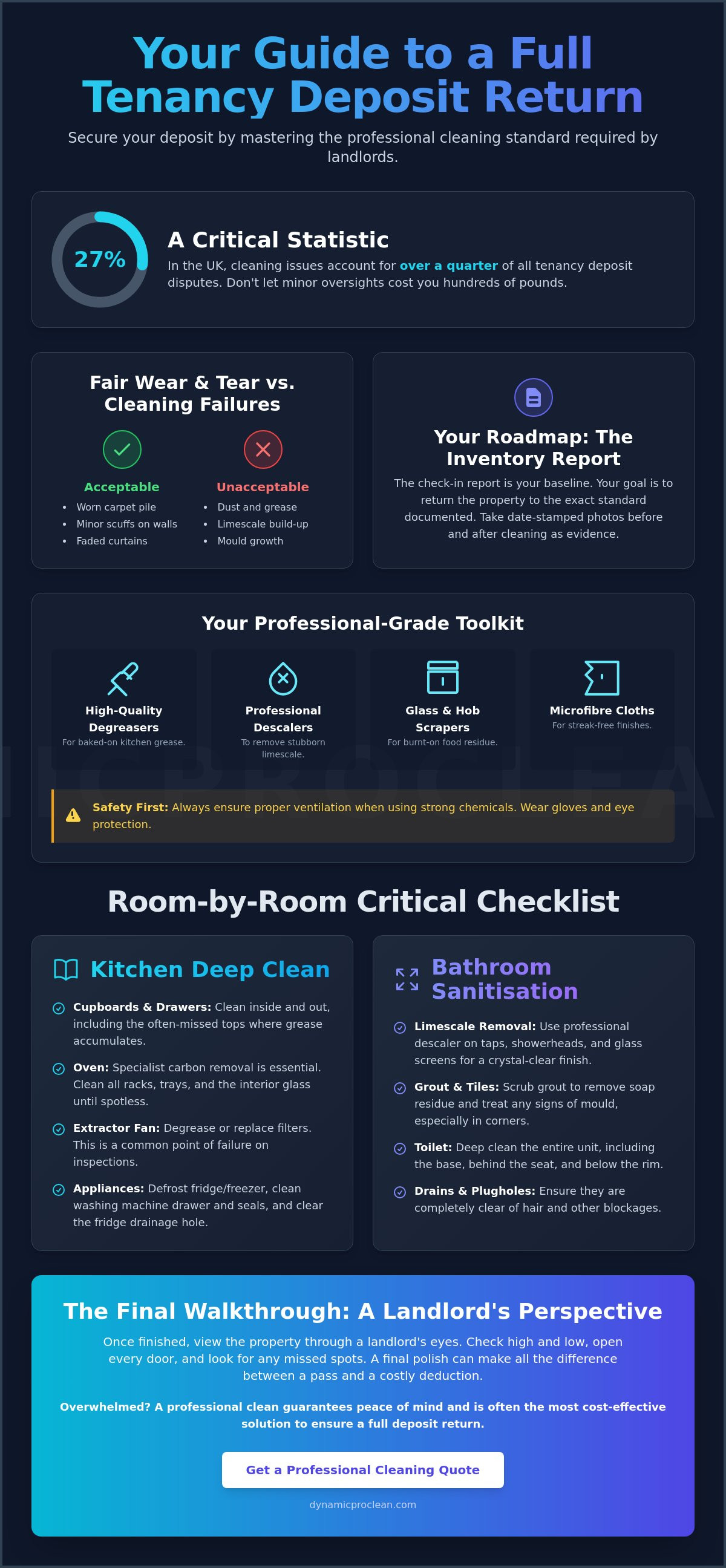
Meeting a landlord's expectations doesn't have to be a guessing game. In the UK, the "professional standard" is the benchmark most property managers use to assess whether a deposit should be returned in full. This standard essentially means the property must be cleaned to the same level documented at the start of your tenancy agreement. It is a thorough, deep clean that reaches the areas daily tidying often misses, such as the inside of appliances, light fittings, and behind radiators.
Distinguishing between fair wear and tear and a cleaning failure is where many disputes arise. Fair wear and tear refers to the natural deterioration of the property through normal use, like a slightly worn carpet pile in high-traffic areas or minor scuffs on a skirting board. However, dust, grease, limescale, and mould are never considered wear and tear. These are classified as cleaning omissions. To tackle these effectively, we recommend a top-to-bottom methodology. By starting at the highest point in a room and working your way down to the floor, you ensure that any falling dust or debris is captured as you progress, preventing you from having to clean the same surface twice.
The Inventory Report: Your Secret Roadmap
Your original check-in inventory and schedule of condition is the most important document you own during a move-out. It serves as the baseline for your end of tenancy cleaning checklist. If the report states the oven was "professionally cleaned to a high standard" when you moved in, that is exactly how it must look when you leave. Use your original check-in photos to set specific targets for each room. Once you've finished your clean, take your own set of date-stamped photos. This evidence is vital if a landlord attempts to claim for issues that were already present or that you have successfully rectified.
Essential Supplies for a Professional-Grade Clean
Standard supermarket sprays are often insufficient for the heavy-duty tasks required at the end of a lease. Professional results require a more robust toolkit. To achieve a finish that passes inspection, you should gather the following:
- High-quality degreasers: Essential for shifting baked-on carbon in kitchens.
- Professional-grade descalers: Necessary for removing stubborn limescale from taps and showerheads.
- Glass scrapers: Perfect for removing burnt-on residue from ceramic hobs without scratching the surface.
- Microfibre cloths: These are superior for achieving a streak-free finish on mirrors and windows.
Safety is just as important as the results. Many of these stronger chemicals can produce intense fumes, so always ensure you have windows open for proper ventilation whilst working. Wearing gloves and eye protection is also a sensible precaution when handling concentrated cleaning agents.
Room-by-Room End of Tenancy Cleaning Checklist
Transitioning from understanding standards to the physical work requires a methodical approach. Every room has its own set of challenges, but your primary goal remains consistent: returning the keys to a property that is indistinguishable from the day you moved in. This attention to detail is what ensures tenancy deposit protection schemes can release your funds without deductions. Using a structured end of tenancy cleaning checklist ensures you don't overlook the "hidden" areas that inventory clerks are trained to find.
The Kitchen Deep Clean: Beyond the Surface
The kitchen is often the most scrutinised room in the house. It's not enough to simply wipe the counters. You must degrease the tops of cupboards where sticky residue accumulates and clean inside every drawer and cabinet. Appliances need special care. Pull out the washing machine soap drawer to scrub away black mould and check the rubber seals for trapped debris. Defrost the freezer at least 24 hours in advance, ensuring the fridge drainage hole is clear and the interior is fully sanitised. Extractor fan filters are a frequent fail point; if they are saturated with grease, they require a deep soak or replacement to pass a professional inspection.
Sanitising Bathrooms and Wet Rooms
Limescale is the enemy here. It builds up on taps, showerheads, and glass screens, especially in hard water areas. Use a professional descaler to achieve a crystal-clear finish whilst ensuring windows are open for ventilation. Ensure the grout is scrubbed free of orange soap residue and that any traces of mould are treated. The toilet must be spotless, including the areas below the waterline and the hinges of the seat. Polishing the tiles until they shine creates a positive first impression that reassures a landlord the property has been well-maintained.
Dusting and Surface Care in Living Spaces
Living spaces and bedrooms often suffer from "dust traps" that are easy to miss. Inventory clerks check the tops of door frames, the ridges of skirting boards, and even the top edges of light switches. Wipe down all walls to remove scuff marks, but be careful not to damage the paintwork. Internal windows and sills should be cleaned to remove any condensation marks or insect debris. If the scale of this task feels overwhelming, booking guaranteed end of tenancy cleaning can take the pressure off your moving day.
Hallways and Entryways: Final Touches
First impressions are vital. The entryway sets the tone for the entire inspection. Ensure the front door is wiped down, the mat-well is vacuumed, and all cobwebs are removed from high corners. If the hallway looks pristine, the clerk begins the inspection with a positive mindset, which can be beneficial if there are borderline issues elsewhere in the property.
Specialist Focus: Professional Oven and Carpet Standards
While general dusting and surface wiping are essential, the oven and carpets are the heavy hitters on any end of tenancy cleaning checklist. These specific areas are scrutinised with a level of intensity that often surprises tenants during the final inspection. A quick spray of a supermarket cleaner rarely suffices when an inventory clerk is looking for burnt-on carbon or deep-seated carpet stains. In our experience, these two items alone account for the vast majority of deposit deductions in the UK rental market.
The standard required is not just "clean" in a domestic sense, but "restored" to the condition documented in your check-in report. This involves moving beyond the visible surfaces and tackling the build-up that occurs over months or years of use. Whether you are dealing with a stubborn grease layer in the kitchen or high-traffic discolouration in the lounge, a professional approach is the only way to guarantee a pass.
Professional Oven Deep Cleaning
The oven is statistically the number one reason for deposit disputes. A professional standard means the appliance should be free from all carbon deposits and grease. This requires more than a surface wipe; it involves cleaning the "invisible" areas. You must remove the fan cover to clean the blade and the housing behind it, where grease often hides. The glass door panes should be carefully separated to remove the brown streaks that get trapped inside. Grill pans and racks often require a prolonged soak in specialised solutions to lift baked-on residue. Finally, the extractor hood needs attention. If the filter is saturated with grease, it must be thoroughly degreased or replaced entirely to ensure the kitchen meets the required hygiene standards.
Carpet and Upholstery Restoration
Vacuuming is a daily necessity, but it doesn't constitute a professional deep clean. Over time, carpets accumulate dust mites, allergens, and significant discolouration in high-traffic zones like hallways. Many tenancy agreements now include specific requirements for professional carpet cleaning, particularly if pets have been present in the property. In these instances, a simple vacuum won't satisfy the legal requirement for sanitisation and odour removal, and you may also need to provide proof of professional pest treatment. For those seeking expert standards in this area, ABC Pest Control Sydney provides the level of thoroughness needed to clear a property of any unwanted guests before handing back the keys. While supermarket machine hire is a popular DIY choice, these units often lack the suction power and heat of professional hot water extraction. This professional method reaches the very base of the carpet pile to lift dirt that a standard vacuum simply cannot reach. Don't overlook upholstery; curtains and fabric sofas can hold onto dust and cooking odours, requiring a thorough refresh to pass the "sniff test" during an inspection.
Ancillary Areas and Military March-Out Requirements
Whilst the interior of the property often takes priority, your end of tenancy cleaning checklist is not truly complete until you address the exterior and outbuildings. First impressions are formed the moment an inventory clerk or landlord pulls into the driveway. Neglecting the garden, the patio, or the garage can lead to unexpected deductions that are easily avoidable with a bit of foresight. A property that looks well-maintained from the outside suggests that the interior has been treated with similar care, setting a positive tone for the entire inspection.
Curb appeal is about more than just aesthetics; it is about demonstrating that the property is being returned in a condition that matches the original inventory. This includes ensuring all rubbish is removed and that any external storage areas are swept and clear of cobwebs. If you have a garage, don't simply shut the door and hope for the best. Sweeping the floor and removing oil spills or dust build-up is a standard requirement that many tenants overlook during the rush of moving day.
Windows and Exterior Surfaces
External window glass, frames, and sills often collect a significant amount of road grime, bird droppings, and spider webs over a long tenancy. These must be cleaned thoroughly, paying close attention to the window tracks which are a notorious fail point during inspections. Patios and driveways should be clear of moss and algae build-up. If the winter months have left your stone surfaces green and slippery, using Professional Exterior Pressure Washing is the most effective way to restore them to an acceptable standard. Finally, ensure your wheelie bins are emptied, washed out to remove odours, and neatly organised for the next occupant.
Military Housing: The March-Out Inspection
For service personnel, the move-out process is governed by a set of ultra-strict criteria known as the "march-out" inspection. These are conducted by Housing Officers who follow rigorous standards set by the Defence Infrastructure Organisation (DIO). Unlike a standard civilian move, these are often "white-glove" inspections where even a tiny amount of dust on a high-level shelf or a single streak on a window can result in a failure. Military families already face an average of £1,900 in unreimbursed expenses during each move, so avoiding the cost and stress of a failed inspection is vital.
The inspection covers everything from the deep-cleaning of provided furnishings to the sanitisation of every cupboard and drawer. Because the standards are so exacting and the timelines are often compressed, many personnel find that booking Professional Military March out cleaning is the only way to guarantee a successful sign-off. This allows you to focus on your next posting with the reassurance that your previous accommodation has been handed back to the required military standard. A comprehensive end of tenancy cleaning checklist tailored for service housing is your best defence against being "marched back in" to rectify minor cleaning omissions.
Final Walkthrough: DIY vs Professional Cleaning
Once you've ticked off every item on your end of tenancy cleaning checklist, the temptation is to drop the keys and leave. However, a final "snagging" walkthrough is the only way to ensure your hard work stands up to a landlord's scrutiny. Walk through the empty property with a fresh pair of eyes, ideally after the furniture has been removed. Look for the small things: a fingerprint on a light switch, a stray cobweb in the corner of the hallway, or dust that has settled on the skirting boards since you last wiped them. These minor details are often what an inventory clerk notices first.
We recommend creating a small "moving day" kit to keep in your car. This should include glass cleaner, a few microfibre cloths, and a handheld vacuum. This allows you to fix any minor issues discovered during your final walk-through without having to unpack your moving boxes. It's about maintaining that "just cleaned" look until the very moment you hand over the keys.
The DIY Risk Assessment
Cleaning a standard three-bedroom property to a professional standard is a significant undertaking. It often requires between 15 and 25 man-hours of intensive labour. When you factor in the cost of high-quality degreasers, descalers, and the hire of carpet cleaning machinery, the financial savings of a DIY approach begin to dwindle. There's also the risk of accidental damage. Using the wrong chemical on a natural stone worktop or an abrasive pad on a polished surface can lead to a repair bill that far exceeds your deposit. Many tenants find that the stress and physical toll of a deep clean, combined with the risk of a deposit deduction, make the DIY route a gamble rather than a saving. It's often a case of trading your time and peace of mind for a result that might still fall short of the landlord's expectations.
The Professional Advantage with Dynamic Pro Clean Ltd
Choosing a specialist partner ensures that your property is restored to the exact standard required by UK inventory clerks. At Dynamic Pro Clean Ltd, we take immense pride in our "Guaranteed Pass" approach. We don't just "tidy" a property; we utilise industrial-grade equipment to achieve results that domestic tools simply cannot match. From removing deep carbon deposits in ovens to extracting years of dust from carpet fibres, our team handles the most challenging aspects of your move. Our methodology is thorough and methodical, ensuring no corner is left untouched. This professional intervention provides you with the documented evidence needed to secure your full deposit return. If you want to ensure a stress-free transition to your new home, Book your professional end of tenancy clean today and let our experts handle the hard work.
Secure Your Deposit with Confidence
Returning your keys should be a moment of relief, not anxiety. By following a structured end of tenancy cleaning checklist and aligning your efforts with the original inventory report, you significantly reduce the risk of costly disputes. You now understand how focusing on high-scrutiny areas like the oven, carpets, and exterior spaces can make the difference between a full refund and a frustrating deduction. Whether you are navigating a standard rental or the rigorous "white glove" expectations of a military march-out, success lies in meticulous attention to detail.
Since 2016, we've helped thousands of tenants across the community achieve a stress-free move. Our team specialises in meeting DIO military march-out standards and provides guaranteed deep cleaning for ovens and carpets to ensure you pass your inspection the first time. Why spend your moving day scrubbing when you can leave it to the experts? Get a Free Quote for Your End of Tenancy Clean today and let us handle the heavy lifting.
You've handled the packing and the planning. Now, take the final step to ensure you leave your old home on the best possible terms and move forward to your next chapter with total peace of mind.
Frequently Asked Questions
Do I have to pay for a professional end of tenancy clean by law?
No, the Tenant Fees Act 2019 prohibits landlords in England from requiring tenants to pay for professional cleaning services. Your legal obligation is to return the property to the same standard of cleanliness as documented at the start of your lease. If you can achieve this standard yourself, you have fulfilled your duties and are entitled to a full deposit return.
How long does a professional end of tenancy clean usually take?
A thorough deep clean typically takes between 4 and 8 hours for a standard two or three-bedroom home. This duration can increase depending on the property's condition and whether you require additional specialist work such as professional oven cleaning. Larger properties or those with significant limescale build-up may require a full day or a team of technicians to complete the work to the required standard.
Will a landlord accept my DIY clean if it looks professional?
Yes, a landlord must accept your clean if the results match the original inventory report. The focus of the move-out inspection is the quality of the finish rather than who performed the work. However, many tenants find it difficult to achieve the "white-glove" standard required for items like ovens and carpets without the use of industrial-grade equipment and chemicals.
What happens if the landlord is not happy with the cleaning standard?
If the landlord or inventory clerk identifies issues, they must provide photographic evidence comparing the current state to the check-in report. They may allow you a short period to return and rectify the omissions. If you cannot return, they may propose a deduction from your deposit to hire a professional, which you can choose to accept or dispute through your deposit protection scheme.
Is carpet cleaning always included in an end of tenancy service?
Professional carpet cleaning is generally an additional service rather than a standard inclusion. Whilst a basic vacuum is part of any end of tenancy cleaning checklist, deep hot water extraction is usually quoted separately. You should check your tenancy agreement to see if specialist carpet sanitisation is required, particularly if you have kept pets in the property during your stay.
Can a landlord deduct money for "fair wear and tear"?
No, landlords are legally barred from making deductions for fair wear and tear. This refers to the natural deterioration of the property through normal use, such as minor carpet thinning or small scuffs on skirting boards. It is important to remember that dirt, grease, and mould are never classified as wear and tear; these remain the responsibility of the tenant to clean.
What are the most common areas missed during a move-out clean?
The most frequent oversights include the tops of door frames, the area behind radiators, and the rubber seals of the washing machine. Many tenants also forget to degrease the extractor fan filter or clean the dishwasher salt reservoir. Using a detailed end of tenancy cleaning checklist is the most effective way to ensure these hidden fail points don't result in a deposit deduction.
Should I clean the windows inside and out before moving out?
You should return the windows to the exact condition noted in your original inventory. Usually, this means cleaning all internal glass, frames, and sills until they are streak-free. External glass should also be cleaned if it was clear at the start of your tenancy, particularly for ground-floor windows or those accessible from a patio, to ensure the property maintains its curb appeal for the final inspection.


