You’ve just finished hosting a lovely Sunday lunch when a splash of coffee meets your favourite linen-blend cushion. Your first instinct is to grab a damp cloth and scrub, but that often leads to the dreaded permanent watermark that haunts many homeowners. It’s frustrating when your centrepiece furniture starts to show the wear and tear of daily life, especially when stubborn pet odours or confusing care labels like ‘S’ or ‘X’ leave you feeling hesitant. We understand that your sofa is an investment, and maintaining its condition is becoming even more vital as 2026 changes to UK tenancy laws place a greater emphasis on long-term property care.
This guide will empower you to master the art of upholstery maintenance, ensuring your home remains a source of pride rather than a source of stress. We’ll explore how to identify specific fibres, decode cleaning codes, and determine exactly when it’s time to enlist a professional fabric sofa cleaning service to restore your furniture to its former glory. By matching the right cleaning chemistry to your sofa’s unique behaviour, you can achieve a finish that looks and smells like new. From routine dusting to handling emergency spills, you’ll gain the confidence to handle any upholstery challenge like a seasoned specialist.
Key Takeaways
- Identify your sofa's specific fibre type and care labels to prevent common mistakes like watermarking or fabric browning.
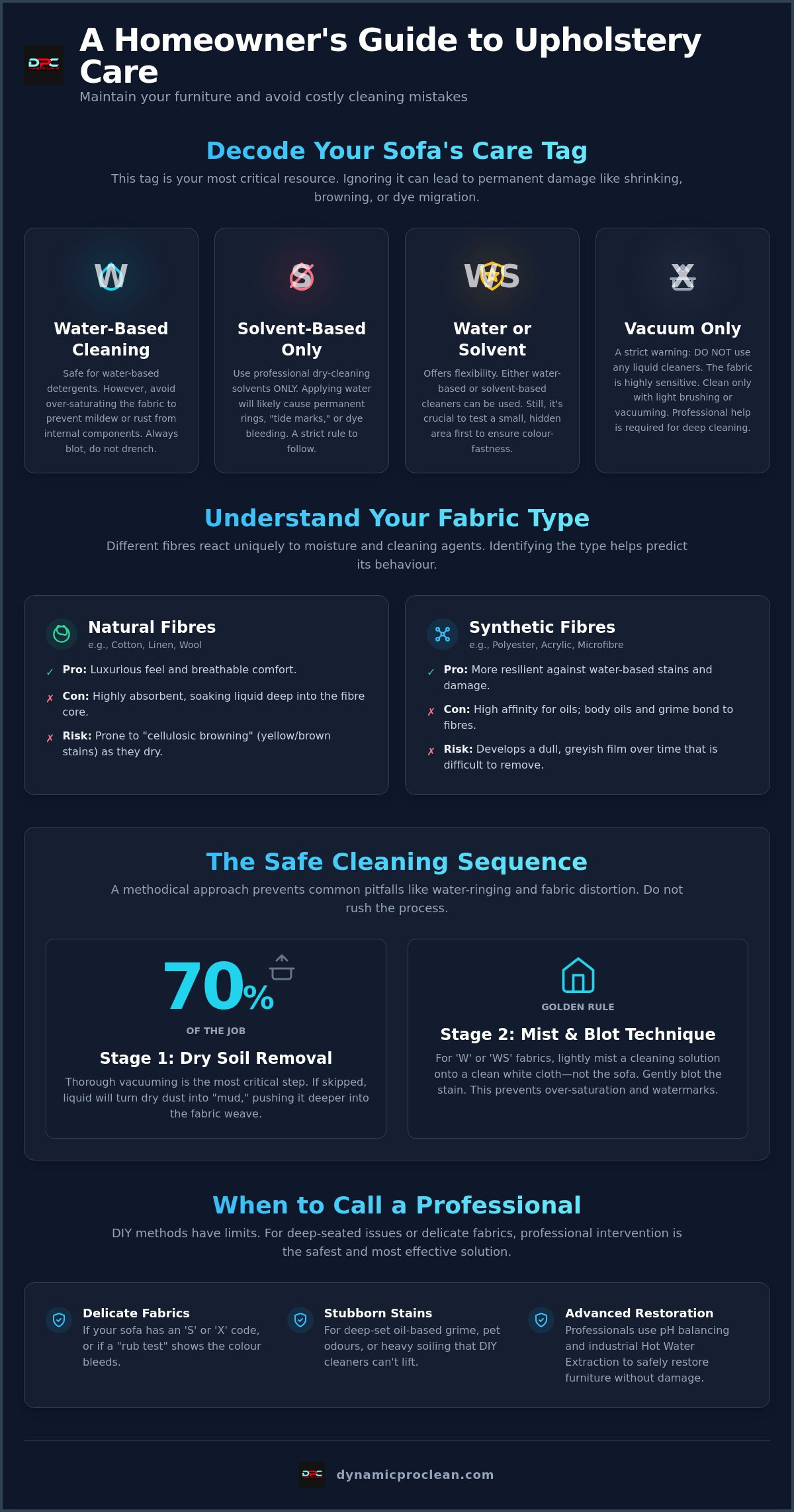
- Learn why thorough vacuuming accounts for 70% of the cleaning job and how the "Mist and Blot" technique prevents over-saturation.
- Discover the "Golden Rule" of stain removal, including why the temperature of your water matters for different types of household spills.
- Understand the technical advantages of a professional fabric sofa cleaning service, such as advanced pH balancing and industrial-grade Hot Water Extraction.
- Gain the confidence to maintain your upholstery between deep cleans, ensuring your furniture remains a clean and healthy centrepiece for your home.
Decoding Upholstery Care: Fabric Types and Cleaning Symbols
Before you reach for a bottle of supermarket spot cleaner, you must locate the manufacturer’s care tag. Usually tucked under the seat cushions or stitched into the base, this small piece of fabric is the most critical resource for any homeowner. It acts as a roadmap for maintenance, detailing exactly how the fibres will react to moisture and chemistry. Skipping this step is the primary reason for permanent damage, as the wrong cleaning agent can cause irreversible shrinking or dye migration. Understanding Upholstery construction helps you appreciate that your sofa isn't just a piece of furniture; it's a complex assembly of textiles that each require a bespoke approach.
Natural fibres such as cotton, linen, and wool offer a luxurious feel and breathable comfort, but they are notoriously fickle during cleaning. These materials are highly absorbent, meaning they soak up liquid deep into the core of the fibre. This often leads to "cellulosic browning," where the fabric develops unsightly yellow or brown stains as it dries. Synthetic fibres like polyester and acrylic are essentially plastic-based. Whilst they are more resilient against water damage, they have a high affinity for oils. Over time, body oils and hair products bond to synthetic strands, creating a dull, greyish film that domestic cleaners struggle to shift. These industry-standard labels indicate whether your furniture requires water-based detergents (W), professional solvents (S), a combination of both (WS), or strictly vacuum-only maintenance (X).
The Universal Cleaning Codes Explained
Code W is the most forgiving, allowing for water-based cleaning solutions. However, this doesn't mean you should drench the material; over-wetting can still cause mildew or rust spots from internal springs. Code S is far more restrictive. If you apply water to an 'S' fabric, you'll likely leave permanent "tide marks" or rings as the dyes react to the moisture. These pieces require professional-grade dry cleaning solvents. Code WS offers some flexibility, but Code X is a strict warning. If your tag features an X, the fabric is highly sensitive and should only be cleaned via light vacuuming. Attempting a DIY liquid clean on an 'X' fabric will almost certainly ruin the piece, making a professional fabric sofa cleaning service your only safe option for deep restoration.
Identifying Your Fabric Fibre
If your tag is missing, you can perform a simple "rub test" to check for colour fastness. Dampen a clean white cloth with a tiny amount of water and gently rub an inconspicuous area on the back of the sofa. If any colour transfers to the cloth, your fabric is a "bleeder" and requires specialist stabilising agents. Fabrics with a "pile," such as velvet or chenille, require extra care. Aggressive scrubbing can crush the delicate loops or fibres, leaving the sofa looking "bruised" or distorted. Microfibre remains a popular choice for families due to its durability, yet it's prone to stubborn oil-based staining. Because microfibre is so dense, it traps grime within its structure, often requiring a professional fabric sofa cleaning service to flush out deep-seated contaminants without damaging the synthetic bond.
The Step-by-Step Guide to Cleaning Your Fabric Sofa Safely
Cleaning a sofa is often approached with a "spray and pray" mentality, yet rushing into the wet phase is the quickest way to ruin your furniture. A methodical, staged approach ensures you don't just move dirt around but actually remove it. Most homeowners underestimate the complexity of upholstery, but by following a professional sequence, you can avoid common pitfalls like water-ringing or fabric distortion. If you’re feeling overwhelmed by the process, our expert upholstery care team is always here to help you achieve a flawless finish.
Stage 1: Dry Soil Removal
Thorough vacuuming is 70% of the cleaning job. This isn't just a quick pass over the cushions; it requires a systematic sweep using dedicated upholstery attachments. Dust and grit act like tiny sandpaper particles, abrading the fibres every time someone sits down. If you skip this stage, any liquid cleaner you apply will turn that dry dust into "mud," pushing it deeper into the weave and making it nearly impossible to extract. Focus heavily on the crevices and the areas behind the backrest where debris accumulates. For pet owners, use a rubberised tool to lift hair without snagging the delicate weave. This dry extraction is the foundation of any reputable fabric sofa cleaning service, ensuring the subsequent wet stages are effective rather than counterproductive.
Stage 2: Controlled Wet Cleaning
The "Mist and Blot" technique is your best defence against over-saturation. Instead of pouring liquid onto the fabric, use a trigger spray to apply a fine mist of pH-neutral solution. Using foam rather than liquid is a clever trick to minimise moisture ingress, as it suspends the dirt on the surface rather than soaking into the internal padding. Always work from the outside of a stain inwards to prevent the mark from spreading. Use a soft upholstery brush to gently agitate the pile, ensuring the solution reaches every fibre without causing "bruising" or flattening the texture. This controlled application protects the structural integrity of the sofa whilst breaking down stubborn grime.
Extraction and drying are where most DIY attempts fail. If a sofa remains damp for more than 24 hours, it can develop a persistent musty odour or even grow mould within the foam. Professional equipment uses high-powered vacuum motors to pull moisture out, but at home, you must rely on airflow. Open windows, use floor fans, and never replace the cushions until they are completely dry to the touch. A professional fabric sofa cleaning service often uses industrial air movers to slash drying times, but for a home clean, patience is your most important tool. Ensure the centre of the cushions is as dry as the surface before you consider the job finished.
Targeted Stain Removal: Strategies for Common Household Spills
When a spill occurs, the first ten seconds determine whether you’ll be left with a temporary nuisance or a permanent reminder. The "Golden Rule" of upholstery care is simple: never rub, always blot. Rubbing a liquid forces the contaminant deeper into the internal padding and can physically distort the fabric’s pile, leading to a "fuzzy" texture that no fabric sofa cleaning service can fully reverse. Use a clean, white absorbent cloth or kitchen roll to lift as much liquid as possible, applying firm downward pressure without any sideways movement.
Understanding the chemistry of the spill is just as vital as your physical technique. Stains generally fall into two categories: tannin and protein. Tannin-based spills, such as coffee, tea, or red wine, often respond well to lukewarm water. However, protein-based stains like blood, milk, or egg require a different approach. If you use warm water on a protein stain, you’ll effectively "cook" the protein into the fibre, setting it permanently. Always use cold water for biological spills to keep the proteins from bonding with the textile. For greasy marks like pizza oil or body creams, you need specialised surfactants that break the chemical bond between the oil and the fabric, allowing the grime to be lifted away rather than just spread around.
Emergency Response for Liquid Spills
For common accidents like a splash of coffee, start by blotting the area until no more colour transfers to your cloth. Whilst many online guides suggest a mixture of white vinegar and bicarbonate of soda, use these with extreme caution. Bicarbonate of soda is abrasive and can be difficult to fully extract, whilst vinegar’s acidity can sometimes set certain dyes. Even more dangerous are supermarket "miracle" stain removers. Many of these products contain high levels of oxygen bleach that can cause permanent colour loss or "halo" marks. If a gentle blot with plain water doesn't work, it's safer to stop and call for a professional fabric sofa cleaning service rather than risking a permanent bleach spot.
Managing Pet and Biological Stains
Pet accidents present a unique challenge because they require more than just surface cleaning; they need odour neutralisation at a molecular level. Enzymatic cleaners are essential here, as they contain biological catalysts that actually "eat" the urea and proteins that cause lingering smells. Without these, the odour will often return as soon as the room gets warm. You should also be aware of "wicking," a phenomenon where a stain appears to have gone, only to resurface a day later. This happens when the liquid has soaked into the sofa backing and travels back up to the surface as the fabric dries. A professional-grade sanitisation process ensures that the source of the problem is removed from the deep layers of the upholstery, providing a truly hygienic and fresh-smelling result.
DIY vs Professional Fabric Sofa Cleaning Service: Evaluating the Risks
Whilst previous sections provided the tools for routine maintenance, there's a vast difference between a surface refresh and a deep restoration. Domestic steam cleaners often lack the vacuum power to extract the water they inject, leading to a soggy sofa that stays damp for days. This is where a professional fabric sofa cleaning service becomes essential. We use Hot Water Extraction (HWE) systems that operate at significantly higher pressures and temperatures than supermarket hire machines. This ensures that dirt is flushed from the very core of the upholstery, not just the surface. Professional technicians also understand the delicate balance of pH. If a cleaning agent is too alkaline and isn't properly neutralised, it can cause "cellulosic browning" in natural fibres. Understanding how carpet clean services and upholstery care go hand-in-hand is part of our holistic approach to home hygiene.
The Dangers of DIY Over-Wetting
The most common mistake we see is over-saturation. When excess water seeps into the internal foam, it creates a damp, dark environment that is perfect for mould growth. Because the foam is hidden beneath the fabric, you might not see the mould until the smell becomes unbearable. For tenants, this is a major risk. Many security deposits are lost because of failed DIY attempts that leave "tide marks" or permanent water damage on delicate linen or cotton blends. If you're moving house, checking our end of tenancy cleaning checklist can help you decide when to tackle a task yourself and when to call in the experts to secure your deposit.
The Value of Professional Expertise
Hiring a specialist gives you the benefit of industrial-grade suction. Our equipment removes allergens, pollen, and dust mites that domestic vacuums simply can't reach. We also use high-velocity air movers to slash drying times, meaning your living room is back in action in hours rather than days. Beyond the technical specs, there's the reassurance of full insurance. Protecting your high-value furniture requires more than just a bucket and sponge; it requires the accountability of a reputable partner who takes pride in bespoke fibre care. If you want to ensure your sofa is handled with professional pride and precision, you can book your specialist upholstery clean with our dedicated team today.
Professional Upholstery Restoration with Dynamic Pro Clean Ltd
Since our founding in 2016, Dynamic Pro Clean Ltd has operated on a simple philosophy: every sofa is unique. We don't believe in a one-size-fits-all approach because the chemistry required for a delicate wool-blend differs vastly from that of a heavy-duty synthetic. Our reputation as a trusted fabric sofa cleaning service is built on this bespoke methodology. We act as a dedicated partner for our clients, ensuring that whether you are a homeowner looking to refresh your living space or a landlord meeting strict property standards, your upholstery receives the highest level of professional pride and care.
The Dynamic Pro Clean process is methodical and thorough. It begins with a detailed inspection of the fabric construction and a series of tests to identify fibre types and colour stability. By understanding the specific needs of your furniture before we begin, we eliminate the risks of browning or shrinkage discussed in previous sections. This precision cleaning ensures that we don't just improve the appearance of your sofa but actually restore the integrity of the fibres themselves. Our professional-grade equipment generates heat and suction power that domestic hire machines simply cannot match, allowing us to reach deep-seated grime that has settled at the base of the weave.
Our Advanced Cleaning Technology
We utilise high-pressure extraction systems that flush out contaminants whilst simultaneously recovering the vast majority of the water used. This industrial-grade suction is paired with eco-friendly, family-safe detergents that are specifically formulated to leave no sticky residues behind. These residues are a common issue with DIY cleans, often causing the fabric to re-soil rapidly. To ensure your home is back to normal as quickly as possible, we employ rapid drying techniques, including the use of high-velocity air movers. This professional fabric sofa cleaning service ensures your lounge is dry, fresh, and ready for use in a fraction of the time required by traditional methods.
Booking Your Service
Securing a specialist clean for your home is a straightforward and transparent process. We provide free, detailed quotes that reflect the specific requirements of your upholstery, with no hidden costs or surprises. Before our technicians arrive, we recommend clearing small items from the room to allow for easy access, though we handle the technical preparation ourselves. Regular professional maintenance doesn't just keep your home looking its best; it extends the lifespan of your furniture and maintains a healthier environment for your family. If you're ready to experience the difference that a dedicated specialist can make, you can contact our team to organise your professional upholstery restoration today.
Secure the Longevity of Your Upholstery with Expert Care
Maintaining a healthy, inviting home starts with the furniture you use every day. By mastering the "Mist and Blot" technique and learning to decode your sofa's care labels, you've taken the first steps toward responsible home maintenance. The true secret to longevity lies in matching specific cleaning chemistry to the unique behaviour of your fabric's fibres. For deep-seated allergens or stubborn stains on delicate materials, enlist the help of a professional fabric sofa cleaning service to ensure a safe and thorough restoration that hire machines simply can't achieve.
Just as you protect your home’s upholstery from daily wear, you can also explore Window Tinting to safeguard your vehicle's interior from UV-related fading and heat damage, providing a comprehensive approach to fabric care.
Since 2016, Dynamic Pro Clean Ltd has acted as a dedicated partner for homeowners and tenants alike. We combine professional-grade fibre restoration technology with the personal touch of a local specialist. Our expert technicians are trained in precise fabric identification, ensuring your furniture is treated with the care and professional pride it deserves. If you're ready to revitalise your living space and enjoy a sofa that looks and smells like new, Request a Free Quote for Professional Fabric Sofa Cleaning today. We're here to provide the bespoke solutions your home needs to stay at its best.
Frequently Asked Questions
How long does a fabric sofa take to dry after a professional clean?
Most sofas take between 4 and 12 hours to dry completely. This timeframe varies based on the fabric's density and the humidity levels in your home. We recommend keeping windows open or using fans to encourage airflow. Because a professional fabric sofa cleaning service uses high-powered extraction, we remove the vast majority of moisture, which is much faster than domestic hire machines.
Can professional upholstery cleaning remove all types of stains?
Whilst we achieve remarkable results, some stains can become permanent if they've chemically altered the fabric's dye. Marks caused by bleach, strong hair dyes, or old "set" ink can be difficult to shift entirely. Success often depends on whether you've attempted a DIY fix first. If you've used harsh supermarket chemicals, you might have accidentally "locked" the stain into the fibres forever.
Is it worth cleaning a 10-year-old fabric sofa or should I replace it?
It's almost always worth cleaning if the internal frame and springs are still in good condition. Quality furniture is built to last, and a professional deep clean can strip away a decade of dulling body oils and dust. You'll often find that a specialist restoration costs a fraction of the price of a new suite, making it a sustainable and cost-effective choice for your home.
How often should I have my fabric sofa professionally cleaned?
We generally recommend a professional clean every 12 to 18 months to maintain the fabric's integrity. If you have a busy household with young children or pets, you might find that a 6-month schedule is more appropriate to manage odours and hygiene. Regular maintenance prevents grit from abrading the fibres, which ultimately extends the life of your furniture.
Are the chemicals used in professional sofa cleaning safe for pets?
Yes, our cleaning solutions are chosen specifically for their safety and efficacy. We utilise eco-friendly, non-toxic detergents that are perfectly safe for four-legged family members once dry. All our products comply with the latest GB CLP hazard standards, ensuring that no harmful residues are left behind. We take immense pride in providing a clean that is as healthy as it is thorough.
What is the difference between steam cleaning and dry upholstery cleaning?
Steam cleaning, or Hot Water Extraction, uses heated water to flush out grime, whilst dry cleaning utilises specialised solvents or low-moisture foams. The choice depends entirely on your sofa’s care label. If your furniture is marked with an 'S', it requires dry solvents to prevent water-ringing. A professional fabric sofa cleaning service will always test your fabric first to ensure the safest method is used.
Can I use a carpet cleaning machine on my fabric sofa?
You shouldn't use a standard carpet machine unless it has a dedicated upholstery tool and adjustable pressure settings. Carpet fibres are much tougher than upholstery textiles, and the high pressure from a carpet wand can easily damage delicate sofa weaves. Over-wetting is also a significant risk, as carpet machines often lack the precision suction needed to extract moisture from deep sofa cushions.
Will professional cleaning help with my dust allergy?
Professional cleaning is incredibly effective at reducing allergens in your home. Sofas act like giant filters, trapping dust mites, pet dander, and pollen within their fibres. Unlike domestic vacuuming, our industrial-grade extraction reaches deep into the padding to remove these triggers. Many of our clients report a noticeable improvement in their indoor air quality and a reduction in allergy symptoms following a deep clean.


