

Could a single missed limescale ring on a bathroom tap or a dusty skirting board really cost you hundreds of pounds of your security deposit? It's a question that keeps many tenants awake at night, especially when the definition of "clean" seems to change depending on who is holding the clipboard. We understand that moving house is already one of life's most taxing experiences, and the pressure of meeting the precise inventory check cleaning standards UK clerks expect can feel like an impossible hurdle to clear during a busy move.
We agree that it's deeply frustrating to spend days scrubbing every corner, only to face a dispute over minor oversights that you consider fair wear and tear. This 2026 guide is designed to remove that uncertainty by providing the exact benchmarks used by professional inspectors to judge a property’s condition. You'll learn how to identify the critical failure points that often lead to deductions so you can approach your move-out with total confidence and professional pride.
We'll walk you through the specific requirements for every room, focusing on high-risk areas like ovens and carpets whilst explaining how the latest regulations affect your inspection. This roadmap ensures your property meets the highest UK standards for a stress-free, successful handover that secures your full deposit return without the headache of a dispute.
Key Takeaways
- Understand the "Professional Standard" benchmark and why cleaning issues cause over 50% of all deposit disputes in the UK.
- Learn to apply the Comparison Principle to see your home through the eyes of an inventory clerk whilst using your check-in report as a roadmap.
- Discover the specific machinery and restoration techniques required to meet inventory check cleaning standards UK benchmarks for carpets and upholstery.
- Identify the top five failure points that lead to deductions, including why the oven remains the primary reason for inspection failure.
- Explore how a guaranteed professional clean or a "Military March Out" standard can act as insurance for your full deposit return.
Understanding Inventory Check Cleaning Standards in the UK
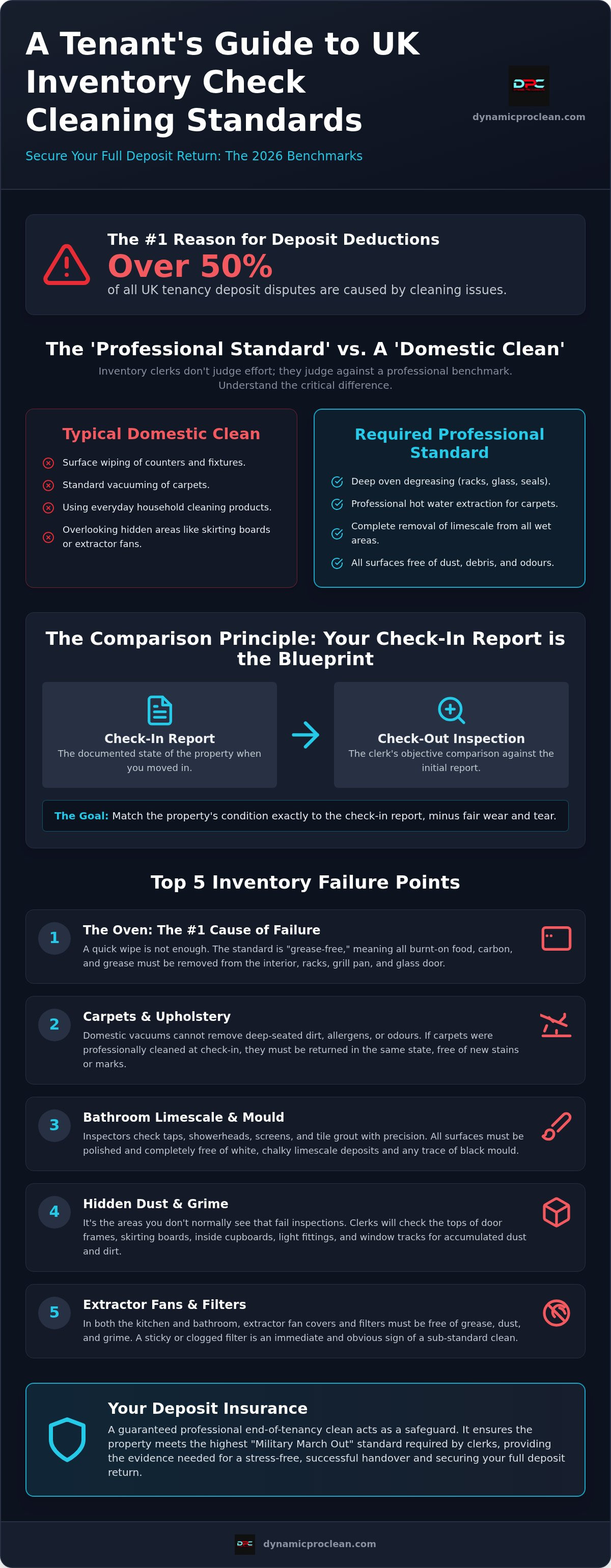
Meeting the inventory check cleaning standards UK clerks expect isn't about how much effort you put in; it's about matching a documented baseline. In the UK rental market, the "Professional Standard" is the gold standard. It describes a property that is spotlessly clean, free from dust, debris, and limescale, regardless of how it looked during your daily life. Data from the Deposit Protection Service consistently shows that cleaning issues account for over 50% of all deposit disputes. This happens because "clean" is a subjective word until it's measured against the Schedule of Condition.
An independent inventory clerk acts as the impartial eyes of the process. They don't take sides between the landlord and the tenant. Their job is to compare the current state of the home against the original check-in report. This Schedule of Condition is the primary evidence used in any dispute. If that report states the property was "cleaned to a professional standard" at the start of your stay, that is exactly what you must return to secure your deposit.
The Legal Framework of UK Tenancy Cleaning
The Tenant Fees Act 2019 fundamentally changed the landscape by banning landlords from charging mandatory professional cleaning fees. However, it didn't lower the bar for cleanliness. Historically, under the Assured Shorthold Tenancy (AST), and now under the new Assured Periodic Tenancies (APTs) introduced in May 2026, the rule remains the same. You must return the property in the same condition you received it, minus fair wear and tear. The biggest point of confusion for many is "Fair Wear and Tear." This covers natural deterioration, like a carpet becoming slightly thinner in high-traffic areas over several years. It does not cover dirt, grease, or stains. If the oven was grease-free at the start, it must be grease-free at the end.
Why Subjective Cleanliness Fails Inspections
Most tenants fail inspections because they rely on their favourite domestic cleaning products and methods. A clerk’s criteria are objective and clinical. They check the tops of door frames, the inside of extractor fans, and the tracks of sliding windows. Domestic tools often lack the power to reach these inventory check cleaning standards UK benchmarks. For example, a standard upright vacuum cannot achieve the same restoration as professional hot water extraction machinery used for deep carpet cleans. Consistency is your best friend. A spotless kitchen won't save your deposit if the skirting boards in the hallway are neglected. Professional-grade equipment ensures that every surface is treated with the same level of care and precision.
How Inventory Clerks Judge Cleanliness: The Comparison Principle
To master the inventory check cleaning standards UK professionals use, you must first understand the Comparison Principle. An inventory clerk isn't simply looking for dirt; they're looking for any deviation from the check-in report. If a window sill was documented as "Dust-free" on day one, it must be "Dust-free" on the final day. This makes your original check-in report the most valuable document in your possession. It identifies high-risk areas, like the oven or the grout in the shower, that were highlighted as pristine when you moved in. If you can't match that baseline, you risk a deduction.
Clerks use high-resolution photography to back up their written descriptions. A blurry phone photo won't suffice if they have a clear shot of a limescale-free tap from the start of the tenancy. Industry guidance from the National Residential Landlords Association (NRLA) emphasises that clear documentation is the best way to avoid disputes. When a clerk sees "Clean" in a report, they aren't making a casual observation; they're applying a technical standard that requires the surface to be free of all visible debris and residue.
Decoding Inventory Report Terminology
Terms like "Good" or "Clean" have specific weight in the world of property inspections. "Professionally Cleaned" implies a level of detail that a standard "Domestic Clean" cannot reach. For instance, "Grease-free" means the extractor fan filter must be clear of all sticky residue, not just wiped over. "Odour" is also a documented condition. If the property smells of pets or stale cooking, even a visually clean room will fail the inspection. If you're feeling overwhelmed by these specific requirements, a guaranteed end of tenancy cleaning service can bridge the gap between "tidy" and "clerk-ready."
The Check-Out Inspection Process
Clerks follow a systematic route, usually starting from the front door and moving clockwise through each room. They focus on "hidden" areas that tenants often overlook whilst in a rush. This includes the tops of kitchen cupboards, behind radiators, and the tracks of patio doors. The inspection usually happens within 24 to 48 hours of you handing back the keys. This timeline is critical; any dust that settles during a long gap can be flagged, so the clean should be the very last thing that happens before you leave. By following the clerk’s logic, you can organise your own cleaning efforts to ensure no corner is missed.
'Professional Standard' vs 'Domestic Clean': Knowing the Difference
Many tenants feel that a long weekend of scrubbing should be enough to satisfy any landlord. However, meeting the inventory check cleaning standards UK clerks require is a restoration process rather than a simple tidy-up. Whilst a domestic clean focuses on surface hygiene for daily living, a professional end-of-tenancy service targets accumulated grime in areas usually left untouched for months. Landlords and letting agents insist on this "Professional Standard" because it ensures the property is in a "rent-ready" condition, allowing the next occupant to move in immediately without complaints.
The distinction often lies in the equipment used. Professional teams utilise industrial-grade machinery, such as high-pressure hot water extraction units for carpets and dip-tanks for ovens, which domestic tools simply cannot match. Holding a professional receipt is also your strongest shield in a dispute. If a disagreement reaches a government-approved tenancy deposit scheme, providing evidence of a professional clean demonstrates that you've met your obligations with due diligence, making it significantly harder for a landlord to justify deductions.
Why DIY Often Falls Short
DIY efforts frequently fail because they overlook technical "hotspots." Extractor fan filters, dishwasher salt reservoirs, and the rubber seals of washing machines are common failure points. The "Oven Test" is perhaps the most notorious; a supermarket spray might remove surface grease, but it won't touch the carbonised deposits behind the fan or between the glass door panels. Similarly, domestic carpet "shampoos" often leave behind a sticky chemical residue. This residue actually attracts dirt, often leading to a failed inventory check for texture or "re-soiling" shortly after the clean.
Professional Standard Comparison Table
| Area | Domestic Standard | Professional Standard (Inventory Pass) |
|---|---|---|
| Oven | Surface grease removed; racks wiped. | Carbon-free; dip-tank restoration of all internal components. |
| Carpets | Vacuumed and surface-brightened. | Deep hot water extraction; stains and odours neutralised. |
| Bathroom | Sanitised and shiny surfaces. | Total removal of limescale from taps, tiles, and grout. |
| Windows | Glass cleaned on the inside. | Streak-free glass, plus tracks, sills, and frames cleared. |
| Woodwork | Dusted or wiped with a damp cloth. | Sugar-soaped to remove scuffs, grease, and fingerprints. |
We take immense pride in achieving what we call the "Military March Out" standard. This peak level of professional execution ensures that every surface, from the skirting boards to the ceiling corners, is returned to its original documented condition, leaving no room for subjective interpretation by an inventory clerk.
The Inventory Failure Points: Room-by-Room Standards
Understanding where most tenants stumble is the first step toward a successful move-out. Whilst every property is unique, inventory clerks consistently flag the same five failure points: the oven, carpets, limescale buildup, high-level dusting, and exterior presentation. These areas represent the highest risk to your deposit because they require more than just a quick wipe-down to meet inventory check cleaning standards UK benchmarks. Focusing your energy on these "hotspots" ensures you address the clerk's primary concerns before they even step through the door.
The Kitchen and Appliances Deep Dive
The kitchen is the most scrutinised room in the house. Clerks perform a "finger-swipe" test on the inside of cupboards and along the tops of wall units. If any grease or dust remains, it's a fail. Appliances must be pristine; hobs should be free of burnt-on carbon, and extractor filters must be degreased until they're no longer tacky. In hard water regions of the UK, de-scaling taps, sinks, and kettles is a non-negotiable requirement. The oven remains the most frequent reason for a failed inspection, as domestic cleaners rarely reach the carbonised grime hidden behind the fan plate or between the glass door panels.
Living Areas and Bedrooms
In living areas and bedrooms, clerks look up. They check for cobwebs on light fittings, dust on curtain rails, and the often-neglected tops of wardrobes. Woodwork is another priority. There is a clear distinction between fair wear and tear, such as a small furniture scuff, and actual dirt. Skirting boards must be sugar-soaped to remove footprints and accumulated dust. Windows must be cleaned internally and externally, including the frames and the tracks of any sliding doors, to ensure a "streak-free" documented condition that matches the check-in report.
Exterior and Garden Standards
Modern inventories don't stop at the back door. Driveways and patios are increasingly included in the Schedule of Condition. If your exterior surfaces have become mossy or stained during your tenancy, exterior pressure washing can restore the curb appeal that clerks expect. Bin cleaning and a tidy front door area create the vital first impression that sets the tone for the rest of the walkthrough. A property that looks well-maintained from the street suggests a tenant who has taken professional pride in the interior as well.
We specialise in achieving the "Military March Out" standard, an elite level of cleanliness that ensures your property passes even the most rigorous checks. If you want to eliminate the risk of failure and secure your full deposit, you can book a guaranteed end of tenancy clean with our expert team today.
Securing Your Deposit with a Guaranteed Professional Clean
Securing your full deposit return is the final, and often most daunting, hurdle of any tenancy. By opting for a specialist like Dynamic Pro Clean Ltd, you effectively transfer the legal risk of cleaning-related deductions to a team that understands the exact benchmarks required for a successful handover. We align every task with the inventory check cleaning standards UK clerks use to judge a property’s condition, ensuring that no surface is left to chance. This proactive choice acts as a form of deposit insurance, providing a bulletproof defence during the check-out inspection that allows you to focus on your new home without financial anxiety.
The Dynamic Pro Clean Ltd Advantage
Since 2016, we've built our reputation on passing the most demanding UK inventory and military inspections with clinical precision. Our methodology goes far beyond a standard surface wipe; for instance, we seamlessly integrate professional oven cleaning into our tenancy packages to tackle the primary cause of deposit disputes head-on. By utilising industrial-grade machinery for carpet and upholstery restoration, we achieve a level of deep-clean restoration that domestic tools simply cannot reach. This ensures every room, from the skirting boards to the ceiling corners, meets the "Military March Out" gold standard that landlords and agents demand for immediate re-letting.
Next Steps for a Stress-Free Move
We understand that moving is an expensive and time-consuming period, which is why we offer a transparent fixed-fee structure for all our comprehensive cleaning services. You can easily request a free, bespoke quote tailored to your specific property size and condition, allowing you to plan your move-out finances without the fear of hidden surprises or last-minute charges. Our goal is to make the transition to your new home as smooth and stress-free as possible by handling the most difficult restoration tasks with professional pride and dedication. Secure your deposit return with our expert cleaning services.
Secure Your Deposit with Confidence
Passing your final inspection is about more than just a tidy home; it's about matching the documented evidence from your move-in day. By understanding the comparison principle and focusing on high-risk failure points like ovens and carpets, you can navigate the move-out process with total clarity. Meeting the inventory check cleaning standards UK clerks require is a high bar, but it's one that ensures you walk away with your full deposit intact and your reputation as a tenant preserved.
Since 2016, we've provided fixed-fee professional cleaning that takes the guesswork out of the inspection process. As specialists in Military March Out standards, we include comprehensive oven and carpet restoration to ensure every surface meets the strictest criteria. Don't leave your security deposit to chance when you can rely on a decade of expertise to handle the heavy lifting for you. Book Your Professional End of Tenancy Clean Today and enjoy the peace of mind that comes with a guaranteed, elite-level finish. We look forward to helping you move forward with total confidence and professional pride.
Frequently Asked Questions
What is the difference between fair wear and tear and a cleaning issue?
Fair wear and tear refers to the natural deterioration of a property through normal use, such as a carpet becoming slightly threadbare in high-traffic hallways or minor scuffs on a wall from furniture. In contrast, a cleaning issue involves avoidable dirt, grease, or grime that can be removed with effort. Inventory clerks distinguish between these by looking for physical damage versus hygiene failures. Whilst you aren't responsible for a decade-old carpet wearing out, you are responsible for ensuring it is free from new stains.
Can a landlord legally insist on a professional cleaning receipt in the UK?
Under the Tenant Fees Act 2019, landlords cannot legally force you to pay for a professional cleaning service or provide a receipt as a condition of your tenancy. However, they can insist that the property is returned to the same inventory check cleaning standards UK recorded at the start. If the check-in report states the home was professionally cleaned, you must match that level of hygiene yourself or hire experts to avoid deductions. A professional receipt remains your strongest evidence if a dispute arises.
Do I need to have the carpets professionally cleaned if I have pets?
If your tenancy agreement includes a pet clause, you're typically required to return the carpets in a condition that is free from pet hair, odours, and allergens. Whilst "professional cleaning" cannot be a mandatory fee, failing to remove pet-related hygiene issues is a common reason for deposit disputes. We recommend professional carpet and upholstery cleaning to ensure deep-seated odours are neutralised, as domestic vacuuming rarely reaches the level required by independent inventory clerks to pass a strict inspection.
What happens if the property fails the inventory check due to cleaning?
If a clerk identifies cleaning failures, the landlord will likely propose a deduction from your security deposit to cover the cost of remedial work. You'll receive a copy of the check-out report detailing the specific areas that fell below the required benchmark. If you disagree with these charges, you can use the dispute resolution service provided by your government-approved tenancy deposit scheme. In these cases, the original check-in inventory serves as the primary evidence to determine if the claim is justified.
How long before the move-out date should the professional clean be performed?
We advise scheduling your professional clean as the very last task before you hand back the keys, ideally within 24 to 48 hours of the inspection. This prevents fresh dust from settling or accidental scuffs from occurring whilst you're still moving boxes. A property that has been empty for a week before the check-out often accumulates enough dust or dead insects to fail a strict inspection, even if it was initially spotless. Timing is critical for a stress-free handover.
Is the oven always checked during a UK inventory inspection?
The oven is almost always the first item an inventory clerk examines because it's the most frequent failure point in UK rentals. They'll check the racks, the glass door panels, and the area behind the fan for carbonised grease. Meeting the inventory check cleaning standards UK requires the appliance to be completely grease-free. Because this is so difficult to achieve with domestic sprays, professional oven cleaning is often the most strategic part of a move-out plan to ensure a pass.
Does professional cleaning include the exterior of the property?
Standard end-of-tenancy packages often focus on the interior, but comprehensive services can include the garden and driveway. We find that modern inventories increasingly include the condition of patios and bins. If your outdoor spaces have accumulated moss or grime during your stay, professional exterior pressure washing can be essential to match the original "Schedule of Condition." Always check your specific check-in report to see if the exterior was documented as pristine at the start of your tenancy.
What should I do if I disagree with the inventory clerk’s assessment of cleanliness?
Your first step should be to compare the check-out report against your original check-in inventory and any photos you took when moving in. If the clerk has flagged an area as "dirty" that was already in that state, you should submit your photographic evidence to the landlord or agent immediately. Providing a receipt from a specialist provider like Dynamic Pro Clean Ltd also demonstrates that you've acted with professional pride to meet the required standards, making it harder for a landlord to justify deductions.


