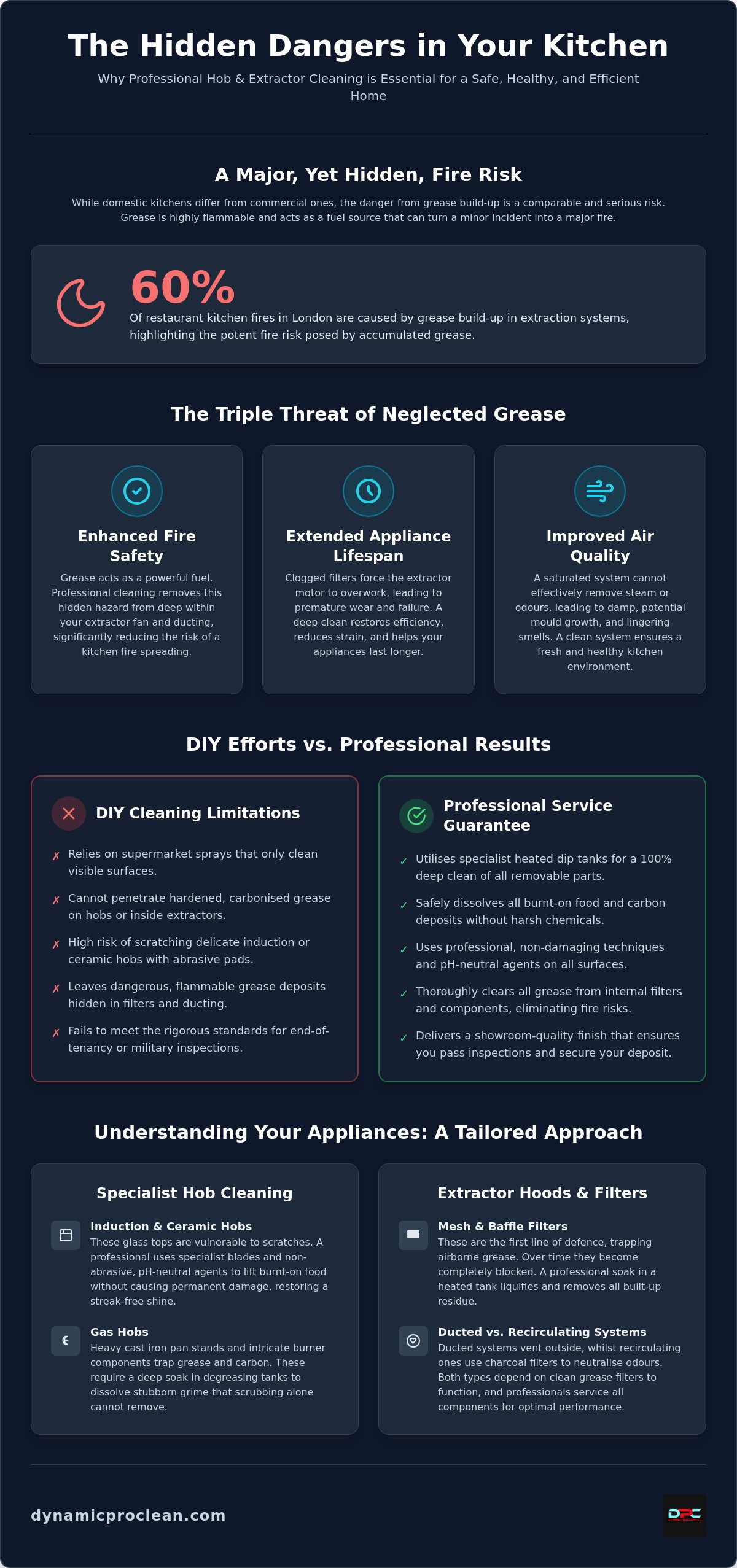
Did you know that an estimated 60% of restaurant kitchen fires in London are caused by grease build-up in extraction systems? Whilst your own kitchen might not be a commercial space, that sticky, yellowing residue is more than just an eyesore; it's a genuine safety hazard that domestic sprays simply cannot touch. We understand the frustration of spending your weekend scrubbing only to be left with a loud extractor fan or the constant worry of scratching a delicate induction hob whilst trying to remove burnt-on carbon.
Choosing a specialist hob and extractor cleaning service is the most reliable way to restore your appliances to showroom condition whilst ensuring your home remains safe and efficient. You deserve a kitchen that functions perfectly, whether you are preparing for a military march-out or simply want to pass a move-out inspection with ease. This guide will show you how professional expertise can extend the life of your appliances and deliver a truly deep clean. We will walk you through the specialist methods used to eliminate stubborn grime, giving you total peace of mind and a kitchen you can be proud of.
Key Takeaways
- Learn why a professional hob and extractor cleaning service is essential for maintaining healthy indoor air quality and preventing hidden fire hazards within your ventilation system.
- Understand the technical requirements for different appliance types, from delicate induction hobs to complex recirculating extractor hoods.
- Discover how specialist heated dip tanks achieve a 100% deep clean that domestic degreasers simply cannot match without risking damage to expensive surfaces.
- Master the simple daily and weekly maintenance habits that will help you preserve a sparkling, grease-free kitchen between professional visits.
- Identify the specific cleaning standards needed to satisfy landlords and pass military march-out inspections to secure your full deposit.
The Critical Importance of a Professional Hob and Extractor Cleaning Service
Many homeowners assume that a quick wipe with a supermarket spray keeps their kitchen in top shape. However, grease is a persistent enemy that migrates far beyond the surface of your appliances. It settles deep within the mesh filters and travels into the ducting where it becomes a hidden, sticky residue. Over time, this build-up hardens, becoming resistant to off-the-shelf degreasers that lack the chemical strength to penetrate aged layers. Investing in a professional hob and extractor cleaning service ensures that these inaccessible areas are thoroughly cleared, preserving both the aesthetics and the safety of your cooking environment.
Fire Safety and Appliance Longevity
The most significant risk of neglected maintenance is the increased threat of a domestic fire. In the UK, kitchen grease build-up is a primary factor in the spread of accidental fires because accumulated grease acts as a potent fuel source. If a flash fire occurs on the hob, the flames can quickly ignite the residue inside the extractor hood, leading to a much more dangerous situation. Beyond safety, your appliance's lifespan is at stake. When filters are blocked, the motor must work significantly harder to pull air through the obstruction, which leads to premature wear and potential motor failure. Carbonisation is the chemical process where organic matter is repeatedly heated until it forms a hard, carbon-rich crust that insulates heating elements and prevents efficient heat transfer.
Hygiene and Air Quality in the Modern Kitchen
A clogged extractor does more than just make a loud noise; it fails to perform its primary job of managing air quality. When the system is saturated with grease, it cannot effectively remove steam, which often leads to dampness and the growth of mould or mildew on your kitchen walls. Lingering cooking odours are also trapped amongst the grease particles, leaving your home smelling like last week's dinner. Proper kitchen exhaust cleaning is essential for maintaining a fresh atmosphere. Additionally, a clean hob ensures that no old, carbonised debris taints the flavour of your fresh meals. By removing these contaminants, you create a more hygienic space for food preparation, ensuring that your kitchen remains the healthy heart of your home.
Understanding Your Appliances: Hobs, Hoods, and Filters
Every appliance in a modern kitchen requires a bespoke approach to maintenance. Whether you have a traditional gas range with heavy cast iron pan stands or a sleek, minimalist induction surface, the cleaning methodology must be tailored to the specific materials involved. A professional hob and extractor cleaning service understands that using the wrong chemical on a stainless steel baffle filter or an aluminium mesh can cause permanent discolouration or chemical etching. Identifying your specific system is the first step toward ensuring its longevity and performance.
Extractor hoods generally fall into two categories: ducted and recirculating. Ducted systems vent cooking vapours directly outside, whilst recirculating models pull air through a series of filters before pumping it back into the room. Both systems rely heavily on mesh or baffle filters to trap grease. In recirculating hoods, charcoal inserts are also used to neutralise odours. These components are vital for maintaining indoor air quality, as they prevent fine grease particles from settling on your furniture and walls. Our team often finds that whilst the external surfaces look tidy, the internal mechanics are struggling under a heavy load of hidden grime.
Induction and Ceramic Hob Specifics
Glass-topped hobs, including induction and ceramic models, are particularly vulnerable to scratches and chemical damage. Using abrasive pads or harsh, acidic cleaners can leave permanent marks that ruin the reflective finish. Burnt-on sugar and fats are especially difficult to remove because they bond with the glass surface at high temperatures. These require a specialist blade and a steady, professional hand to lift the debris without damaging the substrate. Achieving a streak-free, showroom finish requires pH-neutral agents that effectively break down oils without leaving a cloudy residue behind.
Extractor Fan and Filter Variations
Maintenance needs vary significantly between different filter types. Aluminium mesh filters are delicate and can be easily crushed or corroded by strong caustic chemicals. Baffle filters, often found in high-end or range-style hoods, are sturdier but possess complex channels where grease likes to hide. It is also crucial to distinguish between components that can be cleaned and those that must be replaced. Charcoal filters, for instance, have a finite lifespan and cannot be washed; they must be swapped out regularly to remain effective. If you are unsure which parts of your system need attention, our expert hob and extractor cleaning service can provide the clarity and deep-cleaning expertise required to keep your kitchen running smoothly.
Professional Hob and Extractor Cleaning vs. DIY Maintenance
While many of us take pride in keeping a tidy home, there is a stark difference between a surface wipe and a deep, restorative clean. Most homeowners find that no matter how much elbow grease they apply, the stubborn, burnt-on residue on their hob remains. This is because domestic cleaning products are formulated for light, daily maintenance. They simply don't have the chemical strength to penetrate layers of carbonised grease that have been baked on over months of cooking. By choosing a professional hob and extractor cleaning service, you bypass the frustration of ineffective scrubbing and achieve a level of cleanliness that domestic tools cannot reach.
The primary advantage of hiring an expert lies in the efficiency of the process. What typically takes a homeowner an entire afternoon of messy work can be completed by a specialist in roughly an hour. This efficiency doesn't come from rushing; it comes from having the right tools for the job. Professional technicians use van-mounted heated dip tanks to soak removable components like pan stands, burner caps, and filters. This process removes 100% of the grease and carbon without the need for abrasive scrubbing that could damage the substrate of your appliance.
The Professional Equipment Advantage
We utilise non-caustic, eco-friendly chemicals that are safe for your family and pets but incredibly effective against grime. Unlike the harsh, odorous chemicals found in shops, our solutions don't leave behind toxic fumes or damage delicate surfaces. When cleaning the extractor, specialists use industrial-grade tools to reach into the internal motor housing and ducting, areas that are virtually impossible for a homeowner to clean safely. This thorough approach ensures that the results last much longer, as there is no residual grease left behind to attract new dust and particles. It's about restoring the appliance to its original state rather than just cleaning the parts you can see.
Common DIY Mistakes to Avoid
Many well-intentioned DIY efforts end in accidental damage. Using green scouring pads on stainless steel or glass hobs is a common error that leads to permanent scratching. Another frequent mistake is placing aluminium mesh filters in the dishwasher. The high heat and alkaline detergents used in dishwashers cause a chemical reaction that leads to permanent discolouration and structural weakening of the aluminium. For a more detailed look at why expert care outweighs home efforts, you can read our guide on Cooker Cleaning Service Near Me: Professional Restoration vs DIY Comparison. Entrusting these tasks to a professional protects your investment and ensures your appliances continue to function at peak efficiency.
A Step-by-Step Guide to Maintaining Your Hob and Extractor
Maintaining a pristine kitchen doesn't have to be a daunting task if you implement small, consistent habits. Whilst a professional hob and extractor cleaning service provides the deep restoration your appliances need, your daily care prevents the rapid return of stubborn grime. By managing the surface grease before it has a chance to polymerise under heat, you ensure your kitchen remains a pleasant and safe environment for cooking. Following a structured maintenance routine will also significantly extend the time between required professional visits.
Effective maintenance follows a simple rhythm of checks and light cleaning tasks that anyone can perform at home:
- Daily: Wipe down your hob with a damp cloth immediately after it has cooled. This simple act prevents food particles from baking onto the surface during the next use, which is the primary cause of carbonisation.
- Weekly: Use a mild, pH-neutral degreaser to wipe the underside of your extractor hood. This area often collects condensation and oil that can eventually drip back onto your food if left unchecked.
- Monthly: Inspect your filters visually and by touch. If they feel tacky or appear yellowed, they are likely saturated with grease and require a more thorough soak than a simple wipe can provide.
To check if your system is operating at peak efficiency, try the "Paper Test". Turn your extractor fan to its highest setting and place a single sheet of A4 paper against the underside of the filter. If the suction is strong enough to hold the paper in place, your airflow is sufficient. If the paper falls, it's a clear sign that grease has restricted the passage of air, and your motor is under unnecessary strain. This simple diagnostic tool helps you identify when your ventilation is no longer protecting your home from moisture and odours.
Interim Cleaning for Gas and Induction Hobs
For gas hobs, you can safely remove the burner caps and pan supports for a light soak in warm, soapy water to remove surface oils before they harden. When dealing with induction or ceramic surfaces, avoid abrasive chemicals; instead, use a microfibre cloth and a spray of distilled vinegar to achieve a streak-free, reflective finish. To safely use a hob scraper on stubborn deposits, hold the blade at a 45-degree angle and apply gentle, even pressure to lift the debris whilst the glass is slightly damp. This method prevents the scratches that often occur when using metal scourers.
Keeping the Extractor Functioning Between Deep Cleans
Don't ignore the smaller components of your ventilation system. Regularly wipe the exterior housing to prevent grease from pooling in the corners and check that your light bulbs are functioning, as the heat from bulbs can actually help prevent some grease from solidifying on the surrounding casing. Ensure the seals around the hood are intact to prevent steam from escaping into your cabinetry, which can cause wood to warp over time. When the grease becomes too thick for domestic sprays or the paper test fails repeatedly, it's time to call in a professional oven cleaner to handle the technical dismantling and deep cleaning. For a kitchen that truly sparkles and operates at maximum safety, book your specialist kitchen clean today.
Securing Your Deposit: Specialist Cleaning for Tenants and Military Personnel
Moving home is one of life's most demanding events, and the final inspection often feels like the ultimate hurdle. It's a common reality in the UK rental market that kitchen appliances are the primary reason for deposit disputes. Landlords and letting agents have a keen eye for "hidden" grime that tenants often overlook during a busy move. If they find a sticky residue on the underside of an extractor or burnt-on carbon on the hob, they'll likely claim the property hasn't met the required standard. By choosing a professional hob and extractor cleaning service, you ensure these high-pressure areas are handled with expert precision, leaving no room for deductions.
The definition of "professionally cleaned" in a tenancy agreement implies a standard that goes far beyond a domestic deep clean. It requires the total removal of grease from filters, internal housings, and burner components. Simply wiping the surface won't suffice. Hiring specialists provides you with more than just a sparkling kitchen; it gives you a formal receipt. This document acts as a vital piece of evidence of your cleaning diligence. It proves to your landlord that you've invested in professional care, which is often enough to settle any questions about the appliance's condition before they even arise.
Meeting Military March-Out Standards
Military march-out inspections are notoriously rigorous, often exceeding the standards of a typical private rental. Accommodation officers specifically look for carbon-free hobs and grease-free extractor ducting, areas where "good enough" simply isn't an option. We've been helping service personnel meet these exacting requirements since 2016, understanding that a failed inspection can result in significant delays and unexpected costs. To ensure you've covered every detail of your move, refer to The Ultimate End of Tenancy Cleaning Checklist 2026. Our team specialises in the technical cleaning required to pass these inspections the first time, every time.
The Dynamic Pro Clean Guarantee
Our reputation is built on a foundation of professional assertiveness and local reliability. We take immense pride in our craft, offering bespoke solutions that cater to the unique needs of your kitchen appliances. We're committed to providing affordable, fixed-fee specialist cleaning for ovens, hobs, and extractors, so you'll never have to worry about hidden costs. Whether you're a tenant looking to secure your deposit or a homeowner wanting to restore your kitchen's showroom shine, we're here to help. Contact Dynamic Pro Clean for a free specialist cleaning quote today and let our experts handle the dirtiest job in the house.
Take the First Step Toward a Safer, Sparkling Kitchen
Maintaining a clean cooking environment is about more than just aesthetics; it's a vital commitment to your home's safety and air quality. By addressing the hidden grease in your ventilation and the stubborn carbon on your cooking surfaces, you ensure your appliances run efficiently and your kitchen remains a healthy place to prepare meals. Whether you are aiming to pass a strict military march-out inspection or simply want to reclaim your weekend from the "dirtiest job in the house", the right expertise makes all the difference.
Since 2016, our team has provided a specialist hob and extractor cleaning service that delivers showroom results through technical mastery and industrial-grade equipment. We take immense pride in our work, offering fixed-fee pricing with no hidden surprises to give you total peace of mind. As experts in military march-out standards, we understand the precision required to pass even the most rigorous inspections. Let us handle the technical dismantling and deep degreasing so you can enjoy a kitchen that looks and functions like new. Book your professional hob and extractor deep clean with Dynamic Pro Clean today. We look forward to helping you restore the heart of your home.
Frequently Asked Questions
How often should I have my hob and extractor professionally cleaned?
Most households find that a professional visit every 6 to 12 months is ideal for maintaining peak efficiency. If you frequently cook with oil or have a large family, you might benefit from a hob and extractor cleaning service every six months to prevent grease from saturating the internal ducting. Regular professional attention ensures that grease doesn't have the chance to harden into stubborn carbon, making your daily wipe-downs much easier.
Will professional cleaning remove the burnt-on rings on my ceramic hob?
Yes, our specialised tools and non-caustic pastes are designed to lift carbonised rings without scratching the glass. We use professional-grade scrapers at precise angles to remove the physical build-up that domestic sprays cannot penetrate. Whilst we can restore the surface to a smooth, clean finish, it's important to note that we cannot repair physical scratches or permanent chemical etching caused by previous use of abrasive DIY scourers.
Can I put my extractor hood filters in the dishwasher?
We advise against putting aluminium mesh filters in the dishwasher because the high alkalinity of dishwasher tablets causes a chemical reaction. This often results in the aluminium turning a dull grey or black and can even cause the mesh to become brittle. While stainless steel baffle filters are sturdier, they rarely receive a 100% deep clean in a dishwasher. Our heated dip tanks provide a much more thorough result without the risk of discolouration.
How long does a professional hob and extractor cleaning service take?
You can expect a standard hob and extractor cleaning service to take approximately 45 to 90 minutes. The exact duration depends on the size of your appliances, such as a large range-style hob versus a standard four-zone unit, and the level of grease accumulation. Our technicians work methodically to ensure every component, from burner caps to motor housings, is thoroughly degreased and polished before they leave your home.
Is it worth cleaning an old extractor or should I just replace it?
Restoring an existing extractor is nearly always the better investment. Many people assume their extractor is broken because it's noisy or failing to clear steam, but this is usually just a sign that the motor is struggling against grease-clogged filters. A professional deep clean restores the airflow and reduces motor strain, which can add several years to the appliance's lifespan for a fraction of the cost of a new installation.
What is the difference between a ducted and a recirculating extractor for cleaning purposes?
The main difference lies in how the air is filtered and where the grease settles. Ducted systems vent air outside and require deep cleaning of the mesh filters and the entry point of the ducting. Recirculating systems use charcoal filters to neutralise odours; these cannot be cleaned and must be replaced regularly. Both systems require a professional touch to clear the internal motor housing where fine grease particles tend to accumulate over time.
Will the cleaning products used be safe for my pets and children?
The solutions we use are entirely non-caustic and safe for your family, including pets and children. We prioritised eco-friendly, odourless products that effectively break down grease without releasing toxic fumes into your home. This means you don't have to worry about harsh chemical residues or unpleasant smells, and you can get back to cooking in your sparkling kitchen immediately after the technician has finished the job.
Do I need to do anything to prepare before the cleaning technician arrives?
Preparation is minimal as we aim to make the process as stress-free as possible. We only ask that you clear the hob surface and ensure the immediate work area is free from pots, pans, or countertop appliances. There's no need for you to pre-scrub or dismantle any parts yourself. Our technician will handle all the heavy lifting, including the careful removal of all filters and burner components for their deep-soak treatment.


