

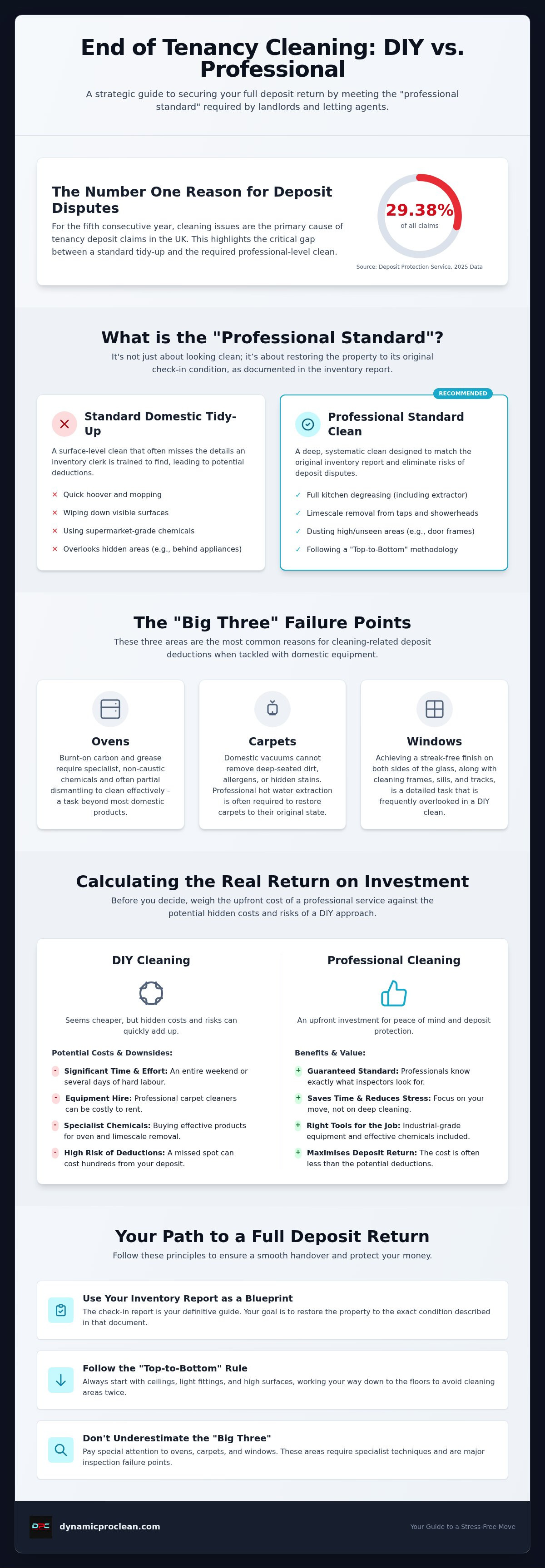
Did you know that cleaning issues were the leading cause of tenancy deposit disputes in the UK for the fifth consecutive year, accounting for 29.38% of all claims in 2025? It is a staggering figure that highlights the significant gap between a standard domestic tidy-up and the "professional standard" that landlords and letting agents now expect. As you prepare for your move, the choice between professional end of tenancy cleaning vs diy is no longer just about saving time; it's a strategic decision to protect your hard-earned money.
We know how exhausting it feels to balance a full-scale move whilst facing the pressure of a final inspection. You have likely spent weeks packing boxes and don’t want to risk your deposit because of a greasy extractor fan or a hidden carpet stain. In this guide, you’ll discover the critical differences between a DIY effort and a professional restoration to ensure your security deposit is returned in full. We’ll walk you through the latest 2026 regulations, the "big three" areas where most tenants fail, and how to secure approval from even the most meticulous landlord or military housing officer.
Key Takeaways
- Understand the specific "professional standard" required by inventory clerks to ensure your property is restored to its original move-in state.
- Master the "top-to-bottom" cleaning methodology and focus on intensive kitchen degreasing to avoid the most common inspection pitfalls.
- Identify the "Big Three" failure points-ovens, carpets, and windows-that frequently lead to deposit deductions when handled with domestic equipment.
- Evaluate the real-world ROI of professional end of tenancy cleaning vs diy by considering the hidden costs of specialist chemicals and equipment hire.
- Learn how military-grade march-out standards can be applied to any tenancy to guarantee a stress-free handover and a full deposit return.
The "Professional Standard" vs. DIY: Why Tidying Isn’t Enough
When you prepare to vacate a property, the term "clean" takes on a whole new meaning. In the eyes of a letting agent or landlord, a professional standard isn't merely about a quick hoover and a wipe-down of the kitchen counters. It's about restoration. To meet this benchmark, you must return the property to the exact state of cleanliness documented in your original check-in report, allowing only for fair wear and tear. This is where the debate of professional end of tenancy cleaning vs diy becomes critical for your finances.
A standard domestic clean often fails a professional inventory check because it lacks the depth required for a transition of tenancy. Whilst your home might look tidy to the naked eye, an inventory clerk will look for accumulated limescale in the showerhead, dust on the top of door frames, and grease behind the extractor fan filters. According to data from the Deposit Protection Service in 2025, cleaning issues accounted for 29.38% of all deposit claims. This makes dirt the absolute number one culprit for deductions within the tenancy deposit scheme framework. If the property was professionally cleaned before you moved in, a DIY effort using supermarket-grade chemicals rarely matches that baseline.
Fair Wear and Tear vs. Cleaning Deficiencies
Understanding the distinction between damage and dirt is vital for protecting your money. Fair wear and tear refers to the natural deterioration of the property that occurs through normal, everyday use. For instance, a slightly scuffed wall in a narrow hallway is usually considered wear. However, a wine stain on the carpet or a layer of burnt-on carbon in the oven is a cleaning deficiency. Landlords cannot legally charge you for "betterment"; they can't use your deposit to replace an old carpet with a brand-new one just because it's slightly worn. Protect yourself by documenting your cleaning efforts with high-resolution photos and keeping receipts for any specialist equipment you hire.
The Inventory Report: Your Legal Blueprint
Your check-in inventory report is essentially the legal blueprint for your deposit return. It's a comprehensive document that records the condition of every skirting board, appliance, and window pane at the start of your lease. When you move out, the clerk will compare the current state against those original photos. Most UK tenancy agreements include clauses stating the property must be "cleaned to a professional standard" if it was handed over in that condition. This means your move-out goal isn't just to make it look "good"; it's to mirror the move-in evidence precisely. If you choose a professional end of tenancy cleaning vs diy approach, you're essentially hiring a team to follow that blueprint and eliminate the risk of a subjective failure during the final walkthrough.
The Essential Room-by-Room Move-Out Checklist
Success in a move-out inspection relies on a systematic approach. We always advise following the "Top-to-Bottom" rule; gravity dictates that dust and debris will fall as you work, so starting with ceilings, light fittings, and the tops of door frames is essential. If you begin with the floors, you will simply find yourself cleaning them twice. This methodical progression is one of the primary reasons the debate between professional end of tenancy cleaning vs diy often leans toward the experts, as specialists have the endurance and equipment to maintain this rigour across every square inch of the property.
Living areas require more than a quick tidy. You must pay close attention to skirting boards, which often harbour hidden layers of dust, and light switches that accumulate oily fingerprints over time. Don't forget the curtain rails and the tops of radiators, as these are "hotspots" for inventory clerks. If a dispute does arise regarding the cleanliness of these areas, you may need to rely on the free dispute resolution service provided by your deposit protection scheme. However, meticulous documentation and a thorough checklist are your first lines of defence.
Kitchen and Dining Area Restoration
The kitchen is arguably the most challenging room to restore to a professional standard. It's not enough to wipe the surfaces; you must clean inside, outside, and specifically on top of every single cupboard. Grease from cooking rises and creates a sticky film on high surfaces that domestic sprays often struggle to cut through. Wall tiles must be degreased until they are "squeaky" to the touch, and grout lines should be scrubbed to remove any discolouration. We also recommend pulling out heavy appliances to sanitise the floor space behind them, as inspectors will often check these hidden gaps for debris or pests. If the scale of kitchen degreasing feels overwhelming, our guaranteed end of tenancy cleaning can handle the heavy lifting for you.
Bathrooms and En-suites
In the bathroom, your main adversary is limescale. In many parts of the UK, hard water leaves stubborn deposits on taps, showerheads, and glass screens that require specialist acidic cleaners to remove without scratching the fixtures. Every glass surface must be polished until it's entirely streak-free. Beyond the obvious fixtures, ensure you clear the dust from extractor fan covers and wipe down the medicine cabinet shelves. The toilet must be scrubbed until it's completely free from limescale at the water line, as even a small brown ring can trigger a deduction. This level of detail is a hallmark of professional end of tenancy cleaning vs diy, where domestic tools often fail to achieve that "like-new" sparkle required for a successful handover.
The "Big Three" Failure Points: Ovens, Carpets, and Windows
While following a room-by-room checklist is a vital starting point, certain areas carry a much higher risk of failure during a final inspection. In our experience, the oven, carpets, and windows are the "Big Three" that determine the outcome of your deposit return. These are the specific spots where the distinction between professional end of tenancy cleaning vs diy becomes most apparent. A landlord's first impression is often formed by the clarity of the window glass, but their final decision usually rests on the state of the heavy-duty appliances.
Windows act as the eyes of the property. Streaks or smears on the glass, or accumulated dust in the window tracks, suggest a lack of care throughout the rest of the home. Similarly, if you are vacating a furnished property, any marks or odours on sofas and chairs must be neutralised. Professional-grade steam cleaning doesn't just remove a visible spot; it sanitises the material to a standard that domestic sprays simply cannot reach, which is often a requirement in high-end UK rental agreements.
Professional Oven Restoration
The oven is notoriously the single most common reason for a failed move-out inspection. Domestic "off-the-shelf" sprays often fail to penetrate thick, carbonised grease that has baked onto the racks and glass doors over months of use. Achieving a true "as-new" finish requires specialist dip-tanks and industrial-grade chemicals that aren't available in local supermarkets. This is why professional oven cleaning is considered the gold standard for tenants who want to avoid disputes. Inspectors will also check the extractor filter for sticky residue; it's a hidden spot that often catches DIY cleaners off guard.
Deep Carpet and Upholstery Cleaning
A standard upright hoover is designed for surface maintenance, but it cannot reach the deep-seated dirt, dust mites, and allergens trapped at the base of carpet fibres. Whilst a DIY shampooer might make the room smell fresh temporarily, these machines often leave the carpet fibres overly damp. This can lead to musty odours or even shrinkage if not handled correctly. Professional heat-extraction methods provide a much deeper restoration by flushing out contaminants and extracting the moisture simultaneously. This level of care is especially vital in high-traffic hallways where stubborn stains and pet odours accumulate. For a more technical look at these restoration processes, you can refer to our end of tenancy carpet cleaning guide. Ensuring your carpets are returned to their move-in state is one of the most effective ways to secure your full deposit.
Specialist Standards: Military March Out and Exterior Spaces
While standard rental agreements require a high level of cleanliness, certain tenancies demand an even more rigorous approach. If you are serving in the Armed Forces, you will be familiar with the "Military Standard" required for a march-out inspection. This is the ultimate "white glove" test, where housing officers check for even the slightest trace of dust on a skirting board or a single streak on a window pane. When considering professional end of tenancy cleaning vs diy in this context, the stakes are significantly higher. A failed inspection doesn't just mean a deduction; it often results in a delayed move or additional charges from the MOD.
Exterior spaces are frequently overlooked by tenants during their move-out preparations, yet they are often explicitly mentioned in tenancy agreements. Your responsibility extends beyond the front door. Driveways, patios, and outbuildings must be returned in a "clean and tidy" condition. If moss has taken over the patio or oil stains have marked the driveway during your stay, these must be addressed. A tidy garden with clear debris and mown lawns sets a positive tone before the inspector even enters the building.
Military March Out Cleaning Requirements
The core of a military march-out is the absolute requirement for every surface to be grease-free and dust-free. This includes areas that are often neglected in domestic cleans, such as the inside of utility room cupboards, the rafters in a garage, and the tracks of sliding doors. Every room must be stripped back to its original condition. Because of this extreme level of scrutiny, many personnel choose a military march out cleaning service to guarantee a pass on the first attempt. It removes the stress of a move whilst ensuring you meet the stringent MOD criteria.
Exterior Pressure Washing and Maintenance
First impressions are formed at the kerbside. Grimy paths and algae-covered decking can lead to unnecessary disputes regarding the general upkeep of the property. Professional exterior pressure washing transforms a property’s first impression by restoring surfaces to their original colour and safety. It effectively removes stubborn oil stains and organic growth that a garden hose simply cannot touch. If your exterior spaces need restoration to meet your contract obligations, you can book our professional exterior pressure washing to ensure every inch of your property is inspection-ready.
DIY vs. Professional Cleaning: Calculating the Real ROI
Deciding between professional end of tenancy cleaning vs diy often comes down to a simple calculation of risk versus reward. While the upfront cost of a DIY clean seems lower, the hidden expenses quickly mount up. You'll need to factor in the hire of a professional carpet extractor, the purchase of specialist degreasers, and the sheer number of hours required to reach a "handover" standard. Most importantly, your own time is a valuable currency during a move. Spending three days scrubbing a property only to have a landlord deduct £200 for a missed oven or dusty skirting boards results in a negative return on your investment.
Hiring a specialist acts as a form of insurance for your security deposit. A reputable company will provide a fixed-fee quote, allowing you to budget accurately without the fear of hourly rates spiralling. When you choose a partner with specific expertise in end-of-tenancy restoration, you're buying peace of mind. Look for a team that is fully insured and understands the nuances of local inventory checks. A final walkthrough with your cleaners is your last chance to spot any minor misses before the keys are returned, ensuring the property is truly flawless for the next occupant.
When to Call in the Professionals
Certain situations carry a higher risk of deposit disputes and almost always require a professional touch. If you've lived in the property for several years, have kept pets, or if there has been smoking on the premises, the level of deep-seated grime and odour will likely exceed the capabilities of domestic products. Under the Renters' Rights Act 2025, which came into full effect on 1 May 2026, there's an even greater emphasis on formal documentation. A professional receipt is a powerful piece of evidence. It proves to your landlord or letting agent that you've fulfilled your obligation to return the property to its original move-in standard, making it much harder for them to justify a deduction through the deposit schemes.
Final Move-Out Day Tips
Even with a professional team on site, there are a few final tasks you must manage to ensure a smooth transition. Always defrost your freezer at least 24 hours before the final inspection to prevent water from leaking onto the kitchen floor. Once the clean is complete and the property is empty, take high-quality, time-stamped photos of every room, including the insides of the oven and cupboards. These images are your ultimate safety net if a dispute arises later. For a concise summary of everything you need to check, you can refer to The Ultimate End of Tenancy Cleaning Checklist 2026. By combining professional restoration with careful documentation, you can move into your new home with your full deposit secured.
Secure Your Deposit and Move with Confidence
Navigating the transition between properties is stressful enough without the added fear of losing your deposit to minor cleaning deficiencies. We've explored how the "professional standard" requires a level of restoration that domestic tools simply cannot achieve, particularly when tackling the "Big Three" failure points of ovens, carpets, and windows. By weighing up professional end of tenancy cleaning vs diy, it becomes clear that the real value lies in the peace of mind that comes with a guaranteed result and a professional receipt for your landlord.
At Dynamic Pro Clean Ltd, we take immense pride in our craft, offering fixed-fee professional cleaning services that eliminate the guesswork from your move-out budget. Whether you need expert carpet and oven restoration or you're facing the rigour of a military march-out inspection, our specialists are here to ensure your property meets the highest possible standards. Don't leave your security deposit to chance. Get a free quote for your guaranteed end of tenancy clean today and start your next chapter on the right foot. You've done the hard work of moving; let us handle the final polish.
Frequently Asked Questions
How clean does a house have to be at the end of a tenancy?
The property must be returned to the exact standard of cleanliness documented in the original check-in inventory report. If the inventory states the property was "professionally cleaned" or "clean to a high standard," a simple domestic tidy-up will not be sufficient to secure your deposit. You are responsible for restoring every surface, from the tops of door frames to the skirting boards, whilst allowing only for fair wear and tear.
Can a landlord charge me for cleaning if I did it myself?
Landlords are entitled to deduct cleaning costs from your deposit if the condition at move-out is worse than the condition at move-in. Even if you spent days cleaning the property yourself, if the final result falls short of the original inventory standard, the landlord can hire a professional team and charge you for the service. This risk is why the choice between professional end of tenancy cleaning vs diy is so important for protecting your finances.
Is professional oven cleaning mandatory for UK tenants?
No, a landlord cannot legally mandate that you use a professional oven cleaning service under the Tenant Fees Act 2019. However, you are legally required to return the appliance in the same condition as you found it. Since most rental ovens are professionally restored before a new tenancy begins, achieving that "carbon-free" finish often requires specialist dip-tanks and chemicals that are difficult to replicate with DIY methods.
What happens if I fail my move-out or march-out inspection?
Failing an inspection typically leads to the landlord or agent deducting the cost of a professional restoration from your security deposit. For those in military housing, a failed march-out inspection can result in a formal re-inspection or "bill-ins" where the MOD charges you for the necessary cleaning. This can delay your move and cause significant stress during your relocation.
How long does a professional end of tenancy clean usually take?
A comprehensive professional clean typically takes between four and eight hours to complete. This duration varies depending on the size of the property and the specific requirements, such as carpet restoration or intensive kitchen degreasing. A standard two-bedroom flat usually requires a team of two specialists working for approximately five hours to reach the rigorous standards expected by UK inventory clerks.
Do I need to clean the windows on the outside as well?
You are generally expected to clean the exterior glass if it was clean when you moved in and is safely accessible. Many tenancy agreements specifically include exterior window cleaning in the tenant's maintenance responsibilities. If the property has high or hard-to-reach windows, it is often safer to include this in a professional cleaning package to ensure you meet your contract obligations.
What is specifically included in a military march-out clean?
A military march-out clean is an intensive deep clean designed to meet the strict MOD "white glove" inspection criteria. It includes a total restoration of the oven, hob, and extractor, deep carpet cleaning, and a thorough wipe-down of all internal surfaces, including woodwork and the insides of all cupboards. It also involves cleaning utility rooms and garages to ensure every inch of the property is grease-free and dust-free.
Can I use my security deposit to pay for professional cleaning services?
You cannot use the funds held in a tenancy deposit scheme to pay for cleaning services before you move out. The deposit is held as security against damages or unpaid rent and is only released after the final inspection. You must pay for any professional cleaning services independently and upfront. Presenting a professional receipt to your landlord serves as vital evidence that you have fulfilled your cleaning obligations.


