Why does your "self-cleaning" oven still smell like last Sunday's burnt roast every time you preheat it? It's a common frustration for many homeowners who realise that, despite the high-tech labels, a pyrolytic or catalytic cycle often leaves behind greasy residue and stubborn carbon deposits. While these built-in features are excellent for light maintenance, booking a self-cleaning oven professional clean remains the only way to restore your appliance to its original glory without risking damage to its delicate internal coatings.
We understand the hesitation that comes with owning a specialised oven. You want a sparkling kitchen, but you're rightly concerned that harsh supermarket chemicals or abrasive scrubbing might ruin those expensive liners. It's a delicate balance to strike, and it's perfectly normal to feel protective of your investment. This guide will show you how to maintain your oven's efficiency and longevity while protecting the sophisticated technology inside. We'll walk you through a clear maintenance checklist, explaining the vital difference between routine DIY care and the moments when expert restoration is essential to keep your kitchen running safely and beautifully.
Key Takeaways
- Learn why self-cleaning cycles are designed for light maintenance rather than deep restoration, and how to spot when your appliance has reached its limit.
- Understand the technical differences between pyrolytic and catalytic systems to ensure you don't accidentally damage specialised internal coatings.
- Discover why booking a self-cleaning oven professional clean is often more energy-efficient and thorough than repeatedly running high-heat cycles.
- Identify the seven specific warning signs, ranging from lingering odours to greasy door glass, that indicate your oven requires expert attention.
- Find out how using non-caustic, fume-free methods can protect your home environment whilst significantly extending the lifespan of your appliance.
Understanding Self-Cleaning Ovens: Myth vs. Reality
Many homeowners choose a Self-cleaning or pyrolytic oven with the hope that they'll never have to scrub a rack again. It's a compelling pitch. However, the term "self-cleaning" is somewhat of a misnomer in the appliance industry. These machines are actually maintenance-assisted tools. They help you stay on top of the mess, but they aren't fully autonomous robots. Whether your oven uses extreme heat to incinerate spills or specialised chemical liners to absorb fat, it still requires regular human intervention to stay hygienic. Relying solely on the internal settings often leads to a false sense of security regarding your cooker's cleanliness.
The reality is that these built-in systems are designed to supplement, not replace, a thorough deep clean. Over time, grease and carbon deposits find their way into areas the self-clean cycle simply cannot reach. This is why a self-cleaning oven professional clean remains the gold standard for maintaining both kitchen hygiene and appliance performance. An expert touch ensures that the hidden mechanics of your oven are as spotless as the visible interior, preventing the long-term degradation that occurs when residue is allowed to bake onto sensitive components.
The Limitations of Built-in Cleaning Cycles
Built-in cycles primarily focus on carbonising solid food waste. Whilst a 500°C pyrolytic blast turns a dropped piece of potato into ash, it often struggles with liquefied grease that has atomised and coated the fan housing or the hidden recesses of the grill. These high temperatures can also bake grease onto the door seals, making them brittle over time. A self-cleaning oven professional clean is designed to reach these neglected zones, ensuring that the components responsible for heat distribution remain free from sticky, flammable build-up. Without this manual intervention, the "burnt-on" problem only worsens as carbon layers stack up behind the panels.
Why Homeowners Still Search for "Oven Cleaning Services Near Me"
The most common complaint we hear from local families is the "half-finished" look after a cycle. You're often left with a pile of grey ash that needs careful wiping, and the glass door almost always remains streaky and brown. The cycle simply doesn't touch the glass effectively. Beyond aesthetics, the safety factor is a major driver for seeking expert help. Running a self-clean cycle can fill a kitchen with acrid smoke and unpleasant fumes, which is particularly worrying for families with pets or young children. Professional restoration provides a fume-free alternative that delivers a sparkling finish without the domestic disruption of a high-heat burn.
The Three Main Types of Self-Cleaning Technology
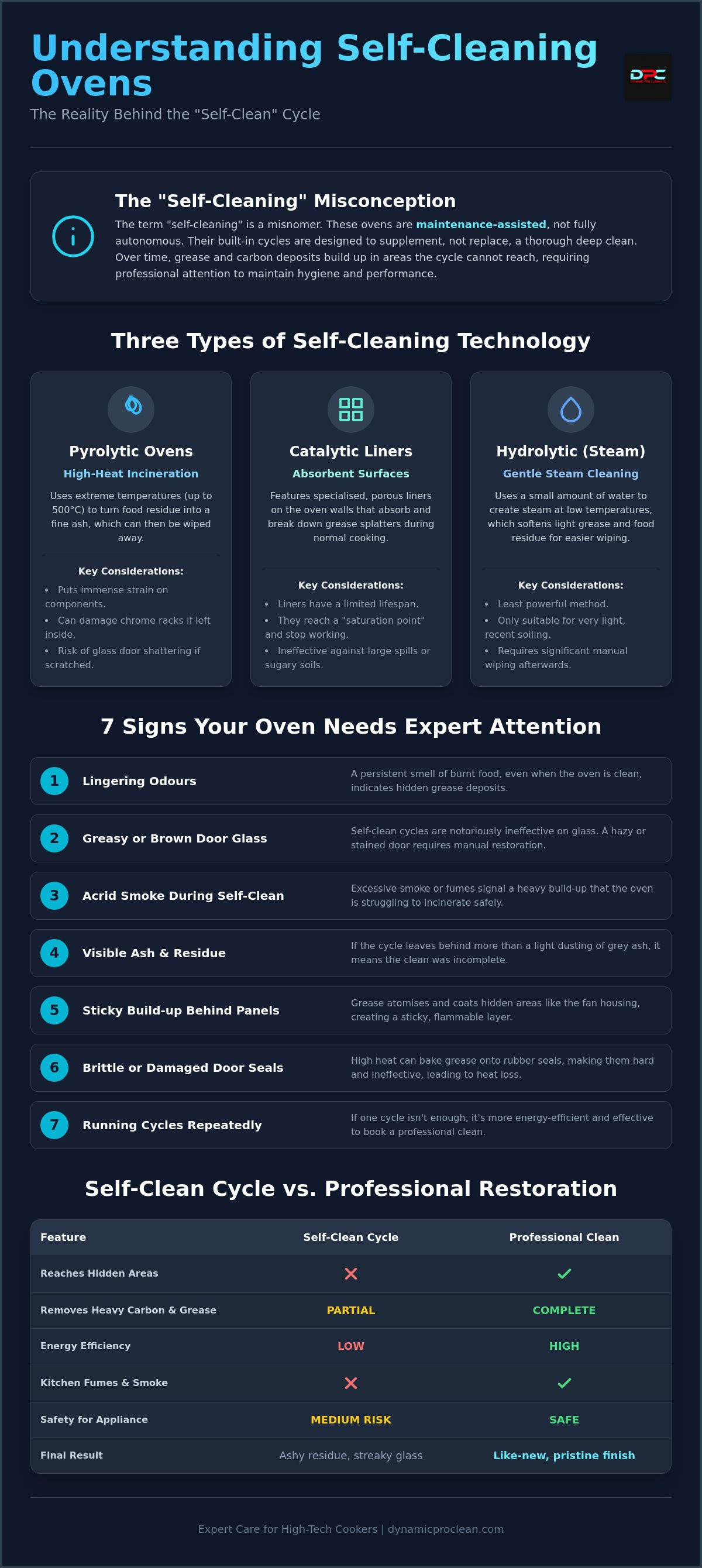
Understanding the specific technology in your kitchen is the first step toward proper maintenance. Manufacturers generally use three distinct methods: pyrolytic (high heat), catalytic (absorbent liners), and hydrolytic (steam). Each system has its own strengths, but they also come with unique vulnerabilities that require a tailored approach. Whilst these features are marketed as labour-saving, they each have a "saturation point" where the built-in technology can no longer cope with the build-up of grease and carbon.
Professional cleaners approach these ovens differently than a standard appliance. We recognise that a one-size-fits-all scrubbing technique can be disastrous for high-tech coatings. A self-cleaning oven professional clean involves assessing the specific liners and seals to ensure the restoration process is both effective and safe for the appliance's long-term health.
Pyrolytic Ovens: High Heat and Hidden Risks
Pyrolytic ovens are the heavyweights of the kitchen. By reaching temperatures up to 500°C, they incinerate grease into a fine ash. However, this extreme heat puts immense strain on the heating elements and the glass door. Many owners don't realise that running this cycle too frequently can shorten the appliance's lifespan. Crucially, you must remove all chrome racks and side rails before starting; the heat will strip their finish and cause them to seise in their tracks. There is also a genuine risk of the glass shattering if the door has micro-scratches from previous DIY scrubbing with abrasive pads. The intense thermal expansion during the cycle can cause compromised glass to fail, which is why a self-cleaning oven professional clean is the safer choice for deep restoration.
Catalytic Liners: When the "Self-Clean" Stops Working
If your oven walls feel like sandpaper, you likely have catalytic liners. These specialised panels are designed to absorb and break down fat splashes whilst you cook at normal temperatures. The problem arises when the liners become saturated. Once the "pores" of the material are filled with grease, the self-cleaning effect stops entirely. A common mistake is attempting to scrub these panels with supermarket caustic sprays, which permanently destroys the catalytic coating. Our team understands how to perform a professional oven cleaning restoration that targets the greasy floor and door without compromising the delicate liners. We ensure the non-liner areas are spotless whilst protecting the integrity of the absorbent panels.
Hydrolytic or steam-clean systems are much gentler, using water and low heat to loosen light soiling. Whilst excellent for a quick weekly tidy, they rarely manage the heavy carbon deposits that build up over months of roasting. We use non-caustic, eco-friendly solutions that are safe for every surface, from the toughest pyrolytic enamel to the most sensitive catalytic panels. This bespoke care ensures your high-tech appliance continues to perform at its peak for years to come.
Checklist: 7 Signs Your Self-Cleaning Oven Needs a Professional Clean
Whilst your appliance's built-in settings are useful for minor spills, they eventually reach a plateau of effectiveness. Many homeowners find themselves in a cycle of running high-heat programmes only to be met with the same stubborn marks and lingering smells. A self-cleaning oven professional clean isn't just about aesthetics; it's about restoring the mechanical integrity of the machine. When the built-in technology can no longer cope with the volume of carbonised waste, the appliance works harder, consumes more energy, and risks long-term damage. Recognising the following seven signs will help you decide when to step away from the control panel and call in a specialist.
Visual and Performance Indicators
The most immediate signs are often the ones you see and smell every time you cook. If you notice any of the following, your oven's self-maintenance features have likely been overwhelmed:
- Grease streaks on the glass: If the door remains brown or streaky after a full cleaning cycle, the grease has bonded to the surface in a way that heat alone cannot shift.
- Smoke at standard temperatures: Seeing smoke curl from the door at a routine 180°C roast is a major red flag. This indicates that old fat is burning off, creating a genuine fire risk.
- Acrid smells: A clean oven shouldn't smell of anything. If a bitter, metallic, or greasy odour taints your delicate bakes, there is deep-seated carbonisation that needs manual removal.
Technical Warning Signs
Beyond the obvious surface mess, there are technical cues that suggest the internal environment of your cooker is compromised. These issues often occur in areas that the self-clean cycle simply cannot reach or effectively treat.
One critical sign is liner saturation in catalytic models. These panels are designed to be porous, feeling much like fine-grit sandpaper. If the panels feel smooth, waxy, or greasy to the touch, they are "spent." They've absorbed as much fat as they can hold and will no longer self-clean during cooking. At this point, the liners need expert restoration to clear the pores without destroying the specialised coating. Other technical signs include:
- Post-cycle carbon deposits: If the floor of your pyrolytic oven is still covered in black, crusty patches rather than fine grey ash after a 500°C burn, the buildup is too thick for the technology to penetrate.
- Brittle or sticky door seals: Grease buildup on the rubber gasket causes it to perish or lose its airtight seal, leading to heat loss and uneven cooking.
- Obscured internal light: A thick film of oil on the light cover is a sign that atomised grease has coated every internal surface, including the cooling fans and sensors.
Ignoring these warnings doesn't just result in a dirty kitchen. It forces your oven to work harder to maintain temperature, which can lead to the heating elements burning out prematurely. Booking a self-cleaning oven professional clean at this stage resets the environment, allowing your appliance's built-in technology to function efficiently once again. Our methodical approach ensures that every sensor and seal is cleared of debris, protecting your investment for the long term.
Professional Cleaning vs. The Self-Clean Cycle: A Detailed Comparison
Comparing a 500°C pyrolytic cycle to a professional dip-tank restoration reveals significant differences in thoroughness. A self-cleaning oven professional clean focuses on total restoration, whereas the built-in cycle is merely a reduction tool. Whilst the furnace-like heat of a pyrolytic oven turns some waste to ash, it doesn't address the greasy film that settles amongst the internal components. This residue often remains behind the panels, continuing to produce smells and smoke long after the cycle has finished.
Energy consumption is another factor many homeowners overlook. Running a three-hour high-heat cycle puts immense strain on your electricity bill and the appliance's heating elements. Over time, this repeated thermal stress can lead to the components perishing prematurely. A professional service provides a deep clean without the extreme heat, preserving the life of your cooker and ensuring it operates at peak efficiency without the risk of a "burn-out" during a self-clean programme.
The "Invisible" Clean: Fans and Heating Elements
Grease that accumulates behind the fan panel is a hidden culprit for poor performance. When this area is blocked by sticky residue, air circulation is restricted. This leads to uneven cooking temperatures and longer preheating times. Even worse, fat deposits on the top heating elements can ignite during normal use, creating a fire hazard that a self-clean cycle often ignores. This is why a professional cooker cleaning service near me is necessary. We dismantle these panels to reach the zones that automated cycles simply ignore, ensuring every mechanical part is free from flammable build-up.
The Glass Door and Racks: The Pro Advantage
Most manufacturers insist you remove chrome racks before a self-clean cycle because the heat will strip their protective coating. This means you're still left with the hardest part of the job. We use specialised dip-tanks that soak these components in non-caustic, eco-friendly solutions. This process achieves a mirror-like shine that domestic scrubbing can't match. We also take the time to split the oven door. This allows us to clean between the glass panes where drips often settle, all whilst protecting the delicate "low-E" heat-reflective coatings found on modern glass.
If you are tired of staring at brown streaks on your glass door despite running the clean cycle, you can book your professional oven restoration to see the difference an expert touch makes. Our methods are completely fume-free and safe for your family, providing a level of hygiene that a standard machine setting simply cannot reach.
Expert Care for High-Tech Cookers: The Dynamic Pro Clean Standard
At Dynamic Pro Clean Ltd, we treat your high-end appliances with the respect they deserve. Since our founding in 2016, we've developed a methodical approach to restoration that goes far beyond a simple wipe-down. A self-cleaning oven professional clean requires a deep understanding of how different manufacturers engineer their products. We don't just scrub; we restore. By using non-caustic, eco-friendly solutions, we ensure that your kitchen remains a safe environment for your family whilst achieving results that a standard pyrolytic cycle simply cannot replicate.
A truly efficient kitchen relies on every component working in harmony. It's often counterproductive to have a pristine oven whilst the ventilation system is choked with old grease. This is why we recommend maintaining your hob and extractor cleaning service alongside your oven restoration. A clean extractor prevents atomised oils from settling back onto your freshly cleaned oven glass, keeping that "just-serviced" shine for much longer. For those moving house, our detailed work is often the deciding factor in passing a tenancy cleaning inspection and securing a full deposit return.
Why Trust a Specialist with Your Self-Cleaning Oven?
Our technicians are specifically trained to identify the nuances of pyrolytic enamel and catalytic panels. We don't guess; we assess. During the process, we meticulously check the integrity of your door seals and internal filters, ensuring that your oven's self-maintenance features can function correctly once we've finished. This commitment to detail is what provides the "showroom look" that domestic cycles fail to deliver. We take pride in our craft, acting as a dedicated partner in your home's maintenance rather than just a service provider.
Booking Your Professional Restoration
We believe in transparency and local reliability. That's why we provide fixed-fee pricing for our work, so you know exactly what to expect without any hidden surprises. When you book with us, our specialist arrives with all the necessary equipment to transform your cooker in a single visit. You won't have to worry about acrid fumes or messy residues; we leave your kitchen exactly as we found it, only with a sparkling, high-performance appliance at its centre. Book your professional oven clean with Dynamic Pro Clean today and rediscover the joy of cooking in a truly clean environment.
Restore Your Kitchen's Heart and Efficiency
Maintaining a high-tech oven doesn't have to be a source of stress or disappointment. Whilst built-in cycles offer a helping hand, they simply cannot match the comprehensive restoration provided by a specialist. By understanding the limitations of your appliance's technology and recognising the early warning signs of grease build-up, you can prevent mechanical failure and keep your kitchen smelling fresh. It's about more than just a tidy kitchen; it's about protecting the longevity of your investment.
Choosing a self-cleaning oven professional clean means you are opting for a service that respects the delicate nature of your appliance. Our expert technicians are specifically trained to handle high-end models using non-caustic, eco-friendly solutions that are safe for your family and your oven's specialised coatings. With our transparent fixed-fee pricing and dedication to achieving a "showroom look," we take the guesswork out of home maintenance.
Ready to see your cooker shine again? Get a Free Quote for Your Professional Oven Clean and let our team handle the hard work. We look forward to restoring your oven to its peak performance whilst you enjoy a cleaner, safer home environment.
Frequently Asked Questions
Can a professional clean a pyrolytic oven without damaging it?
Yes, our technicians are specifically trained to handle pyrolytic enamel without causing any damage. We use non-caustic, eco-friendly solutions that are gentle on the specialised coating whilst being tough on grease. Unlike the extreme heat of a 500°C cycle, our manual restoration process protects the heating elements and door seals from unnecessary thermal stress, ensuring your appliance remains in peak condition.
How often should I have my self-cleaning oven professionally cleaned?
Most households find that an annual professional restoration is the ideal frequency to maintain hygiene and efficiency. If you are a keen cook who roasts meat or bakes frequently, you may benefit from a visit every six months. Regular professional care prevents grease from saturating catalytic liners or baking onto pyrolytic surfaces, making your oven's built-in maintenance features much more effective between our visits.
Why does my self-cleaning oven still smell after I run the cycle?
Lingering smells occur because built-in cycles primarily target solid food waste on the floor and walls, ignoring atomised grease in hidden areas. Fat deposits often settle behind the fan panel or on the roof of the oven, where they continue to produce acrid odours during normal cooking. A self-cleaning oven professional clean targets these neglected zones, removing the deep-seated carbon that automated cycles simply cannot reach.
Do I need to remove the racks before a professional oven clean?
No, you don't need to lift a finger before we arrive at your home. Whilst manufacturers require you to remove chrome racks before a pyrolytic cycle to prevent discolouration, we handle everything for you. We remove all racks and side rails, placing them in our specialised van-mounted dip-tanks. This process safely removes every trace of burnt-on carbon, restoring a mirror-like shine that domestic scrubbing cannot achieve.
Is professional oven cleaning safe for catalytic liners?
Yes, provided the specialist uses non-caustic methods designed for sensitive surfaces. We recognise that catalytic panels are absorbent and easily damaged by harsh supermarket sprays. Our team cleans the surrounding enamel and floor whilst carefully protecting the integrity of the liners. This bespoke approach ensures the panels can continue to absorb and break down fat splashes during your future cooking sessions.
Can you clean the glass between the oven door panes?
Yes, we specialise in safely splitting the oven door to clean every internal layer of glass. Drips and grease often find their way between the panes through the ventilation gaps, creating unsightly streaks that you cannot reach. We dismantle the door assembly, clean the internal surfaces using non-abrasive tools, and reassemble it. This restores perfect visibility and protects the heat-reflective coatings found on modern appliances.
How long does a professional oven clean take for a self-cleaning model?
A standard restoration typically takes between two and three hours to complete. The exact duration depends on the size of your appliance and the extent of the carbon buildup. We work methodically to ensure every component is addressed, from the fan assembly to the door seals. Booking a self-cleaning oven professional clean ensures a thorough result without the domestic disruption or smoke associated with long high-heat cycles.
Is it worth paying for an oven cleaning service if I have a self-cleaning oven?
Yes, because professional restoration reaches the areas that self-clean technology ignores, such as the fan, glass, and seals. Relying solely on high-heat cycles can lead to increased energy bills and mechanical wear on your heating elements. Our service provides a deeper level of hygiene and restores the "showroom look" of your appliance, ultimately extending its lifespan and ensuring your food tastes exactly as it should.


