
Your sofa is likely the most used piece of furniture in your home, yet it often acts as a giant filter, trapping millions of microscopic allergens and stubborn pet odours that a standard vacuum simply cannot reach. It's understandable if you've hesitated to book a professional upholstery cleaning service or tried to tackle the task yourself. Many of our local clients share a common fear of 'water marking' or accidentally shrinking delicate fabrics during a DIY attempt. You want a home that feels fresh and healthy, but you don't want to risk ruining your favourite armchair in the process.
This guide explores the rigorous science behind professional fabric care, moving far beyond surface-level aesthetics to focus on true fibre restoration. We'll show you how a bespoke approach to different materials can safely remove deep-seated dust and bacteria without compromising the integrity of the weave. By the end of this article, you'll understand the exact techniques used to make furniture look and smell brand new, whilst gaining practical steps to maintain that pristine finish between specialist visits. We're here to help you reclaim the comfort and hygiene of your living space with confidence and professional pride.
Key Takeaways
- Learn why professional upholstery cleaning is essential for removing the deep-seated allergens and microscopic pollutants that regular vacuuming cannot reach.
- Discover how to identify your furniture's specific fibre type to prevent the permanent discolouration and "browning" often caused by generic supermarket products.
- Understand the significant risks of DIY methods, specifically how over-wetting can lead to internal mould growth and unpleasant musty odours.
- Explore the specialised techniques used to meet the rigorous standards of military march-out inspections and professional end-of-tenancy agreements.
- Compare modern restoration methods that prioritise deep-fibre extraction whilst ensuring safe drying times for your soft furnishings.
The Essential Role of Professional Upholstery Cleaning in Modern Homes
Your sofa is often the centrepiece of your living room, but it’s also one of the most significant investments in your home. Whilst it provides comfort and a place for the family to gather, it simultaneously acts as a massive air filter, trapping everything that floats through your indoor environment. Many homeowners view upholstery cleaning as a luxury or a purely aesthetic choice, but the reality is much more technical. Professional care is a deep-extraction process that penetrates far beyond the surface fabric, reaching the base of the fibres and even the padding where standard household tools simply cannot reach.
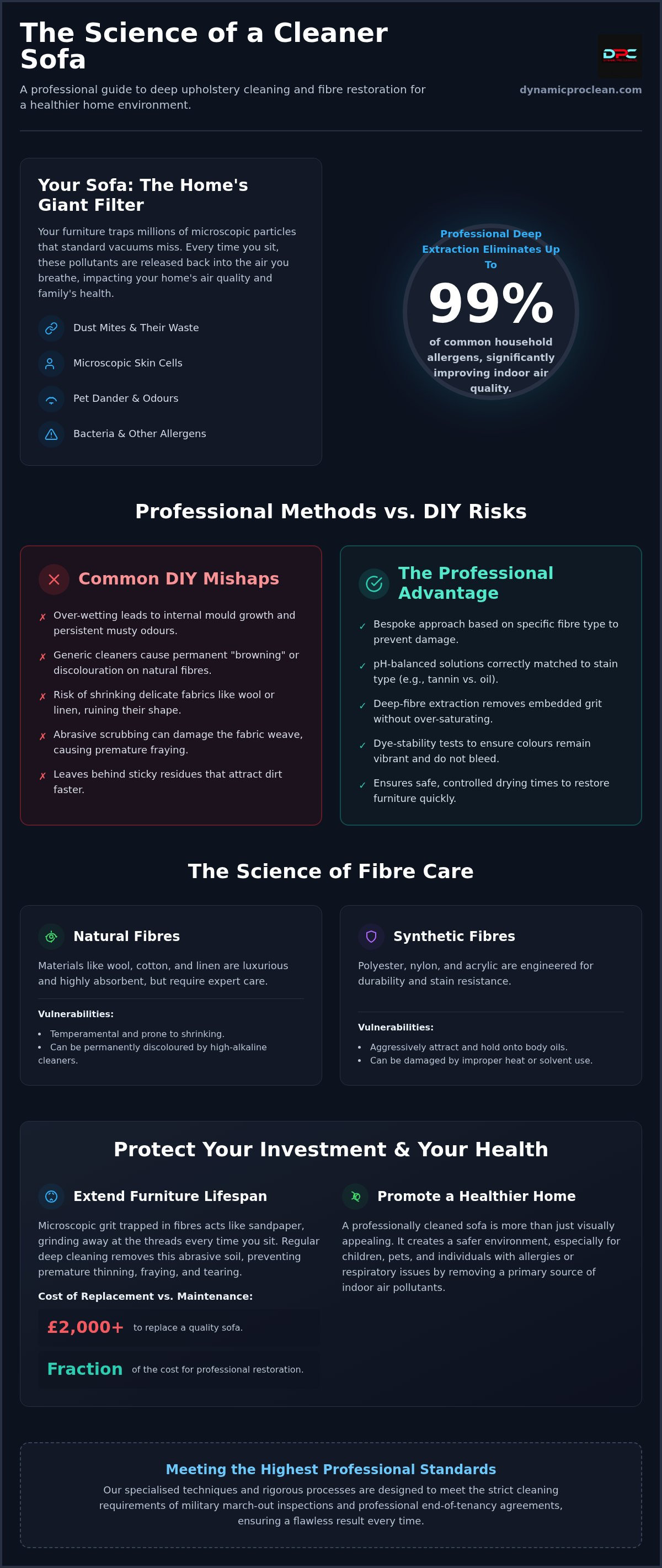
Over time, your furniture becomes a reservoir for "invisible" pollutants. Every day, it collects dust mites, microscopic skin cells, and pet dander. These particles settle deep within the weave, and every time you sit down, they are released back into the air you breathe. By removing these trapped contaminants, we don't just make your sofa look better; we significantly improve the indoor air quality of your home. Taking a proactive approach to maintenance is also a savvy financial decision. Replacing a quality sofa can easily cost £2,000 or more, whereas a scheduled professional restoration costs a fraction of that amount and keeps your furniture in peak condition for years longer.
Health Benefits: Beyond the Visible Dirt
The impact of soiled upholstery on household health is often underestimated. For those suffering from allergies or respiratory issues, a sofa full of dust can be a constant trigger. Bacteria and microbes thrive in the warm, dark spaces between cushions, especially if they’ve been exposed to spills or high humidity. Deep extraction eliminates 99% of common household allergens, creating a much safer environment for children and pets. This level of hygiene is why many experts recommend Conservation approaches to upholstery that prioritise both the structural integrity and the sanitary condition of the piece.
Extending the Lifespan of Your Favourite Furniture
Dirt does more than just dull the colour of your fabric; it actively destroys it. Microscopic grit and soil trapped deep in the fibres act like sandpaper. Every time you sit or shift, these sharp particles grind against the threads, causing them to thin, fray, and eventually tear. Regular professional intervention removes this abrasive grit before the damage becomes permanent. We often suggest combining this care with our carpet clean services to ensure your entire home remains free from the abrasive soils that prematurely age your soft furnishings. It’s about protecting the fabric integrity so your favourite chair remains as comfortable and beautiful as the day you bought it.
Understanding Your Fabric: The Science Behind Expert Fibre Care
Every piece of furniture requires a unique approach based on its molecular makeup. When performing upholstery cleaning, we first distinguish between natural fibres and synthetic blends. Natural materials like wool, cotton, and linen are highly absorbent and luxurious, but they're also temperamental. Synthetic fibres such as polyester, nylon, and acrylic are engineered for durability and stain resistance, yet they tend to attract and hold onto body oils more aggressively than their natural counterparts. Treating a delicate linen armchair with the same aggressive chemicals used on a heavy-duty synthetic sofa is a recipe for disaster.
The "one-size-fits-all" cleaners found on supermarket shelves are often formulated with high-alkaline levels to tackle the toughest stains. On natural fibres, these harsh solutions can cause "browning" or permanent discolouration that ruins the fabric's appearance. Professional care relies on the delicate balance of pH levels. We use acidic solutions for tannin-based stains like tea or coffee, whilst alkaline cleaners are reserved for protein or oil-based soils. Before any moisture touches your furniture, we conduct a dye-stability test on an inconspicuous area. This ensures the colours won't bleed or migrate, protecting the intricate patterns of your upholstery.
Identifying Different Upholstery Materials
Understanding the manufacturer's care label is the first step in any successful restoration. These codes are vital for choosing the correct upholstery cleaning method:
- W: Water-based cleaning agents are safe to use.
- S: Only water-free solvents or dry-cleaning products should be applied.
- WS: Either water-based or solvent-based cleaners are acceptable.
- X: Professional vacuuming only; any liquid may cause shrinking or permanent damage.
Delicate weaves like velvet, chenille, and jacquard present unique challenges, as improper agitation can "crush" the pile or distort the texture. For these complex materials, our specialised fabric sofa cleaning service ensures the pile is groomed and restored to its original lustre. If you're unsure about your fabric's requirements, we're always happy to provide a professional assessment of your furniture's specific needs.
The Chemistry of Stain Removal
Technicians categorise every mark into three main groups: protein-based (food, blood), oil-based (grease, body oils), or tannin-based (wine, coffee). We apply the "T.A.C.T" principle to ensure a thorough clean without damaging the fabric. This includes managing Dwell Time, mechanical Agitation, the specific Chemistry of the solution, and the Temperature of the water. Applying an incorrect pH solution to a sensitive stain can create a chemical bond that permanently "sets" the mark into the fibre, making it impossible to remove later. By controlling these four variables, we achieve a deep clean that respects the delicate nature of your soft furnishings.
Comparing Professional Upholstery Cleaning Methods
Selecting the correct upholstery cleaning method is a technical decision that determines the longevity of your furniture. It isn't a simple choice between wet or dry. It's about matching the chemistry and heat to the specific soil levels and fibre sensitivity. A seasoned specialist prioritises a bespoke solution that achieves maximum soil extraction whilst ensuring the fabric returns to a safe, dry state as quickly as possible. This methodical approach ensures that your soft furnishings are restored without the risk of structural damage or fabric distortion.
The machinery used significantly impacts the final result. Whilst high-powered portable extractors are perfect for apartments or restricted spaces, truck-mounted systems provide the ultimate in heat and vacuum pressure for deep restoration. Regardless of the machine, the process always begins with a targeted pre-treatment. This solution works to break down the bond between body oils and the fabric, followed by gentle mechanical agitation to ensure the cleaning agents reach every part of the fibre before the extraction phase begins.
Hot Water Extraction vs. Dry Cleaning
Hot Water Extraction (HWE) remains the industry's gold standard for deep soil removal. It uses high-pressure steam and suction to flush out contaminants from the very core of the cushions. However, for fabrics with an 'S' care code or those sensitive to moisture, we pivot to solvent-based dry cleaning. HWE provides the most thorough results but requires a longer drying period. Dry cleaning allows for almost immediate use of the furniture, making it the preferred choice for delicate silks or moisture-sensitive rayons that cannot tolerate water-based methods.
Low Moisture and Encapsulation Techniques
In settings where a quick turnaround is vital, 'Very Low Moisture' (VLM) techniques offer a practical middle ground. This often involves encapsulation, a modern chemical process where cleaning agents trap dirt particles within microscopic crystals. Once dry, these crystals become brittle and are simply vacuumed away, leaving the fabric clean and free from sticky residues. Whilst encapsulation is an excellent tool for routine maintenance or commercial office chairs, it doesn't replace the deep-flushing power of HWE when tackling years of accumulated grime or heavy pet odours. It's a maintenance-focused method designed to keep fabrics looking fresh between deep cleans.
Professional Standards vs. DIY: Avoiding Common Upholstery Mishaps
A common question we're asked is why a homeowner shouldn't simply rent a carpet and upholstery shampooer from the local supermarket. It's a fair point, but there's a vast difference between a surface refresh and a true restoration. DIY attempts often lead to "over-wetting," where excess moisture penetrates deep into the cushion's core. Without the industrial-grade suction required to extract that water, the internal fillings remain damp for days. This creates the perfect breeding ground for mould and mildew, often resulting in a persistent "musty" odour that's nearly impossible to remove without professional intervention.
Another hidden danger is the "residue trap." Most domestic detergents are designed to be foamy, but they're incredibly difficult to rinse out with consumer-grade equipment. This leftover soap acts like a magnet for dust and oils, meaning your sofa actually gets dirtier faster after you've cleaned it. Beyond hygiene, there's the physical risk to the piece itself. Improper moisture control can cause fabric shrinkage or "piping" distortion, where the seams of your sofa pull and twist, permanently ruining the furniture's silhouette.
The Risks of Supermarket Rental Machines
Consumer rental machines lack the three critical components of a successful upholstery cleaning: suction, heat, and agitation. Their vacuum motors are often underpowered, leaving fabrics saturated for far too long. They also lack the consistent heating elements needed to break down the greasy body oils and fats that accumulate on armrests. Without professional-grade agitation tools, these machines merely push dirt deeper into the weave rather than lifting it out. To avoid these common pitfalls, it's always safer to book a professional upholstery restoration that uses specialised, high-performance equipment.
Why Fabric Testing is Non-Negotiable
Technicians don't just start cleaning; they perform rigorous tests to protect your investment. We check for "crocking" (colour transfer when dry) and "bleeding" (colour migration when wet) to ensure the dyes are stable. We also evaluate the internal fillings, as some modern foams react poorly to certain solvents or heat. A major risk with DIY is "wicking," where a deep-seated stain appears to vanish when wet, only to resurface as the fabric dries from the inside out. Professionals use specific drying techniques to prevent this "ghosting" effect, ensuring the stain is gone for good, not just hidden.
Specialist Care for High-Stakes Cleaning: Tenancy and Military Requirements
Moving house is one of life's most stressful events. Whether you're a tenant finishing a lease or a service person preparing for a military march-out, the pressure to secure your deposit or pass a final inspection is immense. Specialist upholstery cleaning is often the deciding factor in these high-stakes scenarios. Many people focus solely on the floors, but a stained sofa or a greasy headrest can lead to a failed inspection just as quickly as a dirty carpet. In the current rental market, landlords and housing officers have higher expectations than ever before, often requiring proof of professional intervention to sign off on a property's condition.
Military march-out inspections are notoriously rigorous. With the introduction of the MOLD Act in early 2026, there's an even sharper focus on environmental health and hygiene standards in service housing. It isn't just about making a piece of furniture look "tidy." It's about deep-fibre extraction that meets professional standards of sanitation. We've spent years refining our processes to meet these exact requirements, ensuring that our clients can hand over their keys with total confidence. Providing a professional receipt is frequently a mandatory part of the process, serving as a guarantee that the furniture has been restored to a professional standard rather than just given a superficial domestic wipe.
Meeting Landlord and Inspection Standards
There's a significant legal and practical difference between a "domestic clean" and a "professional restoration." Landlords specifically look for the removal of accumulated oils on high-use areas like armrests and headrests, which a standard vacuum or supermarket foam won't touch. This level of detail is a core component of the end of tenancy carpet cleaning Peterborough standards we provide across the region. To ensure you don't miss any critical areas during your move, we recommend following our end of tenancy cleaning checklist to secure your deposit and satisfy even the most eagle-eyed inspector.
The Dynamic Pro Clean Approach to Upholstery Restoration
Since we were founded in 2016, our mission has been to combine industrial-grade power with a personal, local touch. We utilise high-performance extractors and advanced, eco-friendly chemistry to lift deep-seated soils whilst remaining kind to the environment and your home. We take immense pride in our craft, viewing every sofa and armchair as a piece of furniture worth saving. Our team doesn't just "do a job"; we provide a bespoke solution tailored to the specific fibres and needs of your upholstery. Don't leave your deposit or march-out to chance. Contact Dynamic Pro Clean for a bespoke upholstery quote today and experience the peace of mind that comes with hiring a seasoned specialist.
Restore the Comfort and Hygiene of Your Home Today
Investing in professional maintenance is a commitment to your family's health and the longevity of your furniture. We've explored how identifying specific fibre types and managing pH balances prevents the permanent damage often caused by generic DIY attempts. Whether you're preparing for a rigorous military inspection or simply want to reclaim the freshness of your living room, the right technical approach makes all the difference.
Dynamic Pro Clean has been the local choice for specialist restoration since 2016. We take immense pride in delivering bespoke solutions that respect the integrity of every fabric type, from delicate velvets to durable synthetics. Our team understands the high stakes of tenancy handovers and military march-outs, providing the guaranteed standards you need for a successful pass. This level of expertise is why professional upholstery cleaning remains the most effective way to protect your investment.
Don't let deep-seated allergens compromise your comfort any longer. You can book your professional upholstery restoration with Dynamic Pro Clean today to ensure your furniture looks and smells like new. We look forward to helping you restore your favourite soft furnishings to their original glory.
Frequently Asked Questions
How often should I have my upholstery professionally cleaned?
You should book a professional service every 12 to 18 months to maintain a healthy home environment. If you have pets, young children, or allergy sufferers in the house, increasing this frequency to every 6 months is often recommended. Regular maintenance prevents the accumulation of abrasive grit that wears down fabric fibres, ensuring your furniture stays in peak condition for much longer.
Can professional cleaning remove pet odours and urine stains from a sofa?
Yes, we use specialised enzyme-based treatments that actively break down the organic salts found in pet urine. Unlike domestic sprays that merely mask the smell, our professional upholstery cleaning process neutralises the odour at its source. This deep-extraction method removes the bacteria responsible for the lingering scent, though success often depends on whether the stain was previously "set" by incorrect DIY chemicals.
How long does it take for a sofa to dry after professional cleaning?
Most sofas will be dry and ready to use within 4 to 12 hours. This timeframe varies based on the fabric type, the cleaning method used, and the level of airflow in the room. Synthetic materials cleaned with modern low-moisture equipment tend to dry much faster than natural fibres like wool or cotton. We always provide specific guidance on how to speed up the process using your home's natural ventilation.
Is it possible to clean 'Dry Clean Only' fabrics at home?
Attempting to clean 'Dry Clean Only' fabrics yourself is highly risky and often leads to permanent water-marking or shrinkage. These delicate materials require solvent-based cleaning agents that do not contain water. Professionals use specialised equipment to apply these solvents safely. If your furniture has an 'S' code on the care label, it's essential to hire a specialist who understands the chemistry required to protect the fabric.
Will professional cleaning remove all stains from my upholstery?
Whilst we achieve remarkable results, we cannot guarantee the 100% removal of every stain. Some substances can permanently dye the fabric fibres, especially if they have been left for a long time or treated with the wrong household cleaners. We always perform a thorough pre-inspection to identify permanent damage and give you an honest, professional assessment of what can be realistically achieved before we begin the work.
Is the cleaning process safe for children and pets?
The safety of your family is our priority, so we only use non-toxic, eco-friendly cleaning solutions. Our professional upholstery cleaning products are designed to be powerful against dirt whilst remaining gentle on your home environment. Once the fabric is completely dry, there are no harmful residues left behind. This makes the furniture perfectly safe for children and pets to enjoy immediately after the drying period.
Do I need to vacuum my sofa before the professional cleaners arrive?
You don't need to vacuum beforehand because a thorough industrial-strength vacuum is the first stage of our professional process. We use high-filtration equipment to remove dry soil, pet hair, and abrasive grit from the deepest crevices of your furniture. This step is vital to ensure that we aren't turning dry dust into mud during the subsequent extraction phase, providing a much deeper and more effective clean.
What is the difference between upholstery cleaning and steam cleaning?
Upholstery cleaning is the general term for the entire process of restoring furniture fabrics, whilst steam cleaning is one specific method. Technically known as Hot Water Extraction, steam cleaning is the gold standard for deep soil removal in durable fabrics. However, a professional specialist will evaluate your specific furniture and may choose a low-moisture or dry solvent method instead if the fabric is too delicate for high temperatures.


