

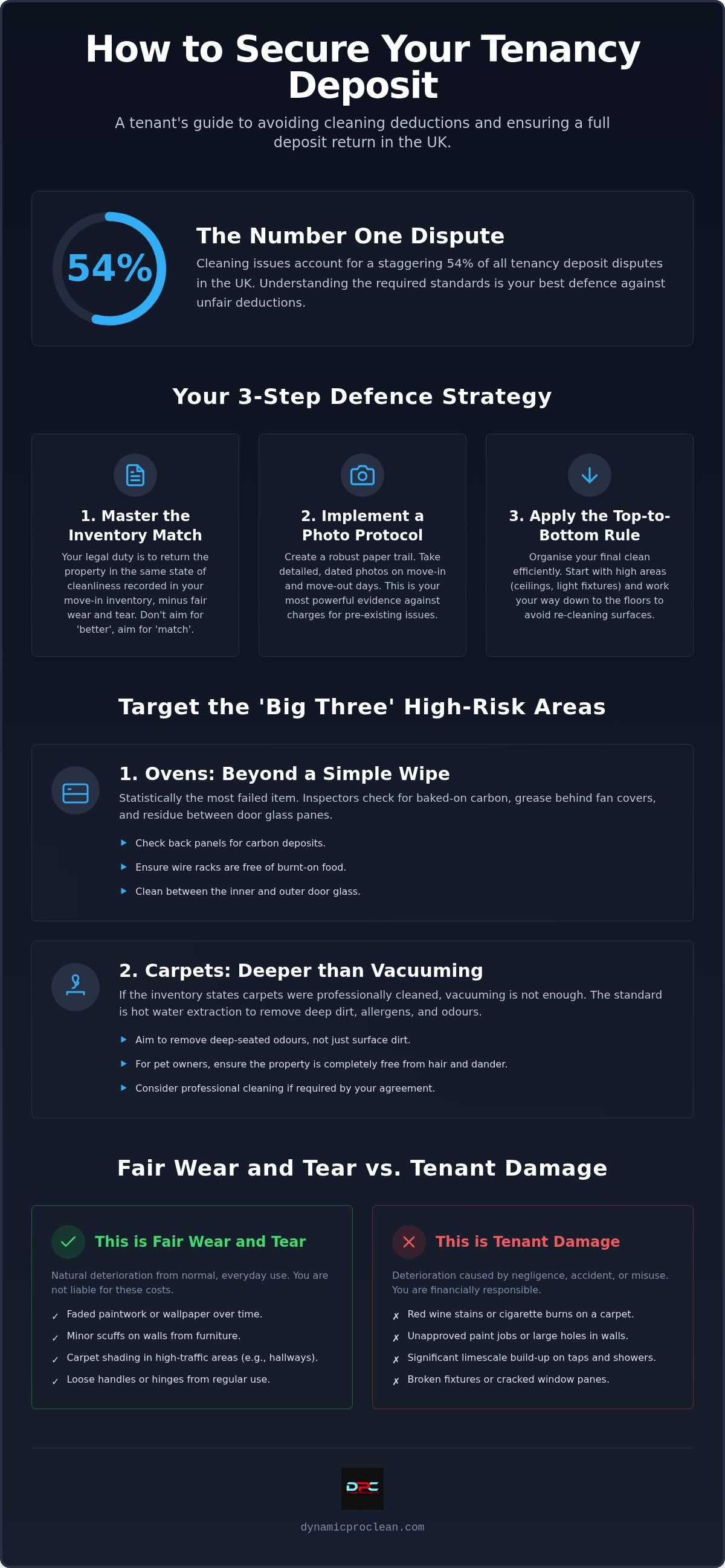
Did you know that cleaning issues account for 54% of all tenancy deposit disputes in the UK? It is an exhausting statistic, especially when you are already juggling the logistics of a move and the physical toll of packing. We understand the frustration of spending hours scrubbing surfaces, only to worry that a missed spot in the oven or a faint mark on the carpet might cost you a significant portion of your deposit. Learning how to avoid deposit deductions for cleaning is not about achieving an impossible level of perfection; it is about strategically matching the condition recorded in your original move-in inventory.
This guide provides a clear, professional roadmap to help you navigate the check-out process with confidence. You will learn the exact standards required to satisfy even the most meticulous landlord, understand the legal difference between deep cleaning and fair wear and tear, and gain the expertise needed to secure your full deposit return. We are here to ensure your hard-earned money stays in your pocket whilst you transition to your new home.
Key Takeaways
- Master the "Inventory Match" principle to ensure you are only held to the specific level of cleanliness documented when your tenancy first began.
- Discover how to avoid deposit deductions for cleaning by prioritising the "Big Three" high-scrutiny areas: ovens, carpets, and limescale.
- Implement a professional "Photo Protocol" to create a robust paper trail that protects you against unfair charges for pre-existing marks or wear and tear.
- Utilise a structured 48-hour timeline and the "Top-to-Bottom" rule to organise your move-out cleaning efficiently whilst avoiding last-minute panic.
- Understand when to choose a specialist end of tenancy clean to provide the professional receipts and standards required for a guaranteed deposit return.
Understanding Landlord Expectations and Fair Wear and Tear
The "Inventory Match" principle is the golden rule of UK rentals. Your legal obligation is to return the property in the same state of cleanliness as you found it, minus fair wear and tear. This is your primary strategy for how to avoid deposit deductions for cleaning. Many tenants feel pressured to leave the property in a better state than they found it, but you are only legally required to match the baseline established on day one. If the property was "clean to a domestic standard" when you moved in, that is the bar you must meet when you move out.
The Tenant Fees Act 2019 significantly changed the landscape for renters. Landlords can no longer legally force you to hire a specific professional cleaning company or charge you a mandatory "checkout fee" as a condition of your tenancy. However, they can still require the property to be cleaned to a specific standard. If your agreement mentions a "professional standard" and the move-in inventory confirms the property was professionally cleaned before you arrived, you must meet that same high bar. Identifying these terms in your contract early prevents expensive surprises during the final inspection.
What Counts as Fair Wear and Tear?
Distinguishing between dirt and damage is crucial for protecting your money. Fair wear and tear refers to the natural deterioration of the property through normal, everyday use. For instance, carpet shading or "traffic lanes" in a hallway are natural, whereas a red wine stain or a cigarette burn is considered damage. Understanding Tenancy Deposit Scheme rules helps you argue your case if a landlord attempts to charge you for faded paintwork, minor scuffs on walls, or loose door handles that have simply reached the end of their natural lifespan.
The Legal Role of the Inventory Report
Your check-in inventory is your most powerful shield. It provides the documented evidence of every existing scratch, stain, or dusty corner. If the property was not perfectly clean when you moved in, you are not responsible for making it "perfect" when you leave. Use this document as a checklist to prioritise your efforts. Focus your energy on the areas that were explicitly marked as "clean" or "professionally laundered" to ensure you know exactly how to avoid deposit deductions for cleaning. If you moved into a dirty property and didn't flag it at the time, matching that lower standard remains your legal benchmark, though having dated photos from your move-in date is always the safest approach for your defence.
Targeting the 'Big Three' Deductions: Ovens, Carpets, and Limescale
Identifying the specific areas that inventory clerks scrutinise most is the most effective way to understand how to avoid deposit deductions for cleaning. Whilst a general tidy-up is necessary, three specific zones account for the vast majority of deposit disputes: the oven, the carpets, and limescale buildup in wet rooms. These areas often require more than just domestic elbow grease to reach the "inventory standard" established at the start of your tenancy. Landlords and agents look for a level of detail that goes beyond surface-level hygiene, focusing instead on deep-seated grime that accumulates over months or years.
Professional Oven Restoration Standards
The oven is statistically the most frequently failed item during a check-out inspection. A quick wipe-down rarely suffices; inspectors will check for carbon deposits on the back panels, grease hidden behind the fan cover, and burnt-on residue on the wire racks. For many renters, professional oven cleaning is the most common tenant-requested service because domestic degreasers often fail to shift stubborn, baked-on carbon. Pay particular attention to the oven door glass; most modern units allow you to slide out the inner panes to clean the grease that inevitably drips between the layers, a detail that clerks never miss.
Reviving Carpets and Upholstery
Carpets are another high-risk zone for your deposit. Simple vacuuming is rarely enough to satisfy a landlord, especially if the move-in report states the carpets were professionally steam cleaned. Hot water extraction is the industry standard for removing deep-seated odours, allergens, and microscopic dirt that a domestic vacuum cannot reach. If you have kept pets, you must ensure the property is free from hair and dander to remain compliant with your agreement. Utilising end of tenancy carpet cleaning is often the only reliable way to restore the pile in high-traffic zones and remove faint stains that might otherwise lead to a deduction.
Limescale is the silent deposit killer, particularly in hard water areas. It clings to chrome taps, shower screens, and the grout between tiles, leaving a cloudy residue that suggests neglect. To truly master how to avoid deposit deductions for cleaning, you must also look at the "hidden" zones that are frequently overlooked. According to official government guidance, you are responsible for returning the property in its original state, which includes degreasing extractor fan filters, refilling dishwasher salt reservoirs, and scrubbing the mould from washing machine seals. If the scale of these tasks feels daunting whilst you are busy packing, our guaranteed end of tenancy cleaning can ensure every one of these meticulous standards is met with professional pride.
Creating a Robust Paper Trail of Proof
Evidence is the only currency that matters when it comes to securing your refund. Even if you have performed an exemplary clean, without documented proof, you remain vulnerable to a landlord's subjective interpretation of "cleanliness." Mastering how to avoid deposit deductions for cleaning requires a shift in mindset; you are no longer just a tenant moving out, but a meticulous record-keeper preparing a defence. A comprehensive paper trail serves as a powerful deterrent against unfair cleaning charges, proving that you have met your legal obligations in full.
Your "Photo Protocol" should be methodical and exhaustive. Wide-angle shots are excellent for showing the overall condition of a room, but they rarely win disputes. You need macro detail shots of the high-scrutiny areas we discussed previously. This means photographing the sparkling interior of the oven, the back of the fridge, and the inside of every kitchen cupboard. If an inventory clerk claims a surface is greasy, a timestamped, high-resolution close-up is your most effective rebuttal. Don't forget to capture the "hidden" spots, such as the tops of door frames and the tracks of sliding windows, as these are often the first places a clerk will check for dust.
The Move-Out Photo Checklist
- Ceilings and Skirting Boards: Capture clear shots of the corners to prove the absence of cobwebs and the tops of skirting boards to show they are dust-free.
- Windows and Tracks: Photograph the glass to show it is streak-free, but prioritise the window tracks and sills where dirt often accumulates.
- Appliances: Ensure you have clear evidence of the seals on the washing machine and the filters in the extractor hood.
The Power of Professional Receipts
A professional invoice is often viewed by deposit schemes as the ultimate proof of due diligence. Whilst many tenants attempt a DIY clean, domestic products can sometimes leave behind soapy residues or streaks that an inspector will flag as a failure. A receipt from a reputable specialist demonstrates that the property has been handled with professional pride and industrial-grade equipment. This document acts as a form of "deposit insurance," making it significantly harder for a landlord to justify further deductions for areas already covered by a professional guarantee. Storing these digital receipts alongside your timestamped photos ensures your evidence is organised and ready if a dispute arises.
On the day of the inspection, try to be present for the check-out walkthrough. Be polite and assertive whilst the clerk is inspecting. If they point out a minor issue, such as a missed cobweb, offer to rectify it immediately on the spot. Taking your own notes during this process shows the clerk that you are well-informed about how to avoid deposit deductions for cleaning. This proactive behaviour often encourages a more balanced report, as the inspector knows you have the evidence to challenge any inaccuracies.
How to Organise Your Final Move-Out Clean
Moving house is famously chaotic, but a lack of structure during your final days at a property is the quickest way to lose your deposit. To truly master how to avoid deposit deductions for cleaning, you need a methodical approach that accounts for the scale of the task whilst you are busy packing boxes. We always recommend the "Top-to-Bottom" rule. This simple logic ensures that dust and debris disturbed from ceilings, light fittings, and the tops of cupboards fall onto surfaces you have yet to clean, preventing double-handling and wasted effort.
Before you begin, ensure you have a full kit of essential supplies. You will need high-quality degreasers for the kitchen, specialist limescale removers for the bathroom, and a generous supply of microfibre cloths. Whilst domestic products are sufficient for regular maintenance, you must identify when a task requires industrial-grade equipment. For example, deep-seated carpet stains or heavily carbonised ovens often require professional-grade chemicals and machinery to reach the standard required by an inventory clerk.
Step-by-Step Move-Out Timeline
- 48 Hours Prior: Focus on the most time-consuming tasks. Deep clean the oven and defrost the freezer. Freezers must be completely clear of ice and wiped dry to prevent pools of water on moving day.
- 24 Hours Prior: Tackle the bathrooms, internal windows, and general dusting. This is the time to remove limescale from taps and ensure all cupboards are wiped inside and out.
- Moving Day: Once the furniture is removed, perform your final vacuuming and mopping. This ensures you aren't treading dirt back into the carpets whilst carrying boxes.
The Final Walkthrough Checklist
Before you post the keys through the letterbox, perform a final walkthrough to check the "forgotten" areas. Inspectors frequently flag dust on the tops of doors, grime on light switches, and cobwebs behind radiators. You must also ensure all rubbish, including garden waste and unwanted items, is completely removed from the property. For a comprehensive room-by-room breakdown, we recommend referencing the ultimate end of tenancy cleaning checklist to ensure nothing is overlooked.
If your moving schedule is too tight to manage this level of detail yourself, our guaranteed end of tenancy cleaning provides the professional assurance that every corner will meet the most rigorous landlord expectations. Entrusting the final scrub to experts allows you to focus on your new home whilst we secure your previous deposit.
Professional Solutions for a Guaranteed Deposit Return
Choosing between a standard domestic clean and a specialist end of tenancy service is often the deciding factor in whether you receive your full refund. While a weekly clean focuses on maintaining a liveable environment, our Guaranteed end of tenancy cleaning is a technical restoration designed specifically to satisfy an inventory clerk's checklist. We understand that the transition between homes is one of the most stressful life events you can experience. Entrusting this final, critical task to a seasoned specialist provides a form of "deposit insurance" that domestic efforts simply cannot match.
Since 2016, Dynamic Pro Clean Ltd has refined a methodology that aligns with the most stringent rental standards in the UK. We take immense pride in our reputation as a dedicated partner for tenants who value bespoke solutions over a one-size-fits-all approach. Whether you are a private renter or a service member preparing for a move, our team brings a level of professional pride and local warmth to every instruction. We don't just clean; we restore your property to the baseline required to ensure your hard-earned money is returned without dispute.
Why Specialist Knowledge Matters
Our expertise is rooted in handling the most demanding inspections, including Professional Military March out cleaning. These inspections are famously rigorous, requiring a level of detail that goes far beyond standard cleaning. We utilise industrial-grade equipment for Professional Carpet and upholstery cleaning, reaching deep-seated dirt that domestic vacuums leave behind. This specialist knowledge is vital because we know exactly where inventory clerks look. We target the hidden grease in extractor fans and the limescale in hard-to-reach recesses, ensuring your property matches the "inventory standard" discussed earlier in this guide.
- Industrial Restoration: We use high-pressure steam and professional-grade degreasers that are unavailable to the general public.
- Strategic Insight: Our team understands the nuances of the Tenant Fees Act and what landlords can legally expect from a tenant.
- Proven Reliability: With years of experience in high-deduction areas like ovens and carpets, we eliminate the guesswork from your move-out process.
Taking the Next Step
Booking your professional move-out clean is the most effective way to learn how to avoid deposit deductions for cleaning. When you contact us, we provide a bespoke quote tailored to your property size and specific requirements, ensuring you only pay for the services you actually need. During a Dynamic Pro Clean Ltd appointment, you can expect a methodical, thorough progression through your home, culminating in a property that is ready for the most meticulous inspection. We provide the professional receipts you need to prove due diligence to your landlord, acting as your final shield against unfair charges.
Relocation should be an exciting new chapter, not a period of financial anxiety. Let us handle the heavy lifting and the technical scrubbing whilst you focus on settling into your new home. Contact our friendly team today to organise your specialist clean and secure your peace of mind.
Secure Your Full Refund with Confidence
Transitioning to a new home should be a time of excitement rather than financial stress. By mastering the "inventory match" principle and prioritising high-scrutiny areas like ovens and carpets, you have already taken the most important steps to protect your money. Remember that a robust paper trail of timestamped photos and professional receipts is your strongest defence against subjective inspections or unfair charges.
Learning how to avoid deposit deductions for cleaning doesn't have to be an overwhelming solo task whilst you are managing the logistics of a move. Since 2016, our expert-led teams have provided the meticulous attention to detail required to meet even the most rigorous military march-out standards. We are fully insured and bring over 8 years of specialist experience to every property, ensuring your previous home is left in impeccable condition.
Secure your full deposit with our professional end of tenancy cleaning services and let us handle the technical restoration whilst you focus on your future. You have the knowledge and the tools to succeed; we are here to provide the guaranteed results that make your relocation seamless and stress-free.
Frequently Asked Questions
Can my landlord force me to pay for a professional clean in the UK?
No, your landlord cannot legally mandate that you pay for a professional clean or use a specific company under the Tenant Fees Act 2019. However, you are legally obligated to return the property to the same level of cleanliness documented in your move-in inventory. If you fail to meet this standard, your landlord is entitled to deduct the cost of a professional service from your deposit to rectify the issue.
What is the most common reason for deposit deductions?
Cleaning is the most frequent cause of deposit disputes in the UK, accounting for 54% of all cases according to industry data. This often involves failures in high-scrutiny areas such as the oven, carpets, and bathroom limescale. Because it is the primary reason for financial loss, understanding how to avoid deposit deductions for cleaning is essential for any tenant wishing to secure their full refund during the check-out process.
How clean does a rental property need to be when I move out?
The property must match the specific condition and cleanliness level recorded in your original check-in inventory report, allowing for fair wear and tear. If the report states the property was "professionally cleaned" at the start of your tenancy, you must return it to that same high standard. If it was only "cleaned to a domestic standard," that is the benchmark you are legally required to meet when you hand back the keys.
What happens if I disagree with the cleaning charges my landlord proposes?
If you disagree with proposed charges, you should first attempt to resolve the issue directly with your landlord by providing your evidence. If an agreement cannot be reached, you can use the free Alternative Dispute Resolution (ADR) service provided by your tenancy deposit protection scheme. Both parties must submit their evidence, such as photos and receipts, and an independent adjudicator will then make a final, binding decision on the matter.
Does the landlord have to provide cleaning equipment for the garden?
Landlords are generally not required to provide tools or equipment for garden maintenance unless this is specifically stated in your tenancy agreement. Most contracts place the responsibility for keeping the garden tidy, mown, and free of weeds squarely on the tenant. If you don't have the necessary tools, you may need to hire them or consider a specialist service to ensure the exterior meets the required move-out standard.
How long do I have to challenge a deposit deduction for cleaning?
You typically have three months from the date your tenancy ends to raise a formal dispute with your deposit protection scheme. It is best to act quickly as soon as you receive the check-out report and the landlord’s list of proposed deductions. Prompt communication and clear, timestamped evidence are your best tools for how to avoid deposit deductions for cleaning that you believe are unfair or inaccurate.
Is "fair wear and tear" the same as being dirty?
No, fair wear and tear and cleanliness are distinct legal concepts. Fair wear and tear refers to the natural, unavoidable deterioration of the property that occurs through normal daily use, such as a slightly worn carpet pile in hallways. Dirt, grease, and limescale are considered avoidable through regular maintenance and do not fall under this category. You are always responsible for cleaning the property, regardless of the age of the fixtures.
Should I defrost the freezer before the end of my tenancy?
Yes, you must completely defrost and wipe dry the freezer before your final inspection takes place. Leaving a freezer full of ice or a pool of water at the bottom is a common reason for a cleaning deduction. To avoid this, switch the appliance off at least 24 hours before you move out, place towels down to catch the meltwater, and ensure the interior is bone-dry before you hand over the keys.


